Symptom: flat tire
Diagnostic: tire damage that requires repair
Most punctures, nail holes or cuts up to 7 mm (¼") confined to the tread may be satisfactorily repaired by a trained professional using industry-approved procedures.
Solution:
Change your flat tire out with your spare tire. Then visit an authorized Michelin tire dealer for an inspection as soon as possible. They can then determine what damage (internally as well as externally) your tire has, and whether to repair or replace your tire.
Symptom: underinflated tire
Diagnostic: underinflation
A tire is called underinflated when it doesn’t have sufficient air pressure to meet the vehicle manufacturer’s recommended psi (pressure per square inch). Underinflated tires lead to flats and tire blowouts.
Underinflation:
reduces tread life through increased tread wear on the outside edges (or shoulders) of the tire
generates excessive heat, which reduces tire durability and can lead to tire failure
reduces fuel economy through increased rolling resistance (underinflated tires make your vehicle work harder).
Solution:
Add air to your tire until it reaches the proper air pressure (psi, as measured by an air pressure gauge). To find the proper air pressure, consult your vehicle’s owner’s manual or find your recommended psi on the sticker on your door jamb.

Find a Dealer
FAQ
Read our Frequently Asked Questions.
Flat spotting occurs when a section of the tire's tread develops a flat area rather than maintaining its round profile. There are two main types: temporary (soft) flat spotting, where the tire deforms slightly from sitting in one position under load—very common after winter storage or long periods of parking—and hard flat spotting (semi-permanent), caused by ABS or locked-wheel braking that generates a flat worn spot on the tread during an emergency stop, or by storage in extreme conditions (overinflated, in heat).
Temporary flat spotting almost always resolves within 15–20 minutes of driving at highway speeds. As the tires rotate and warm up, the rubber relaxes and returns to its round profile. If vibration persists beyond 20–30 minutes of normal highway driving, the flat spotting may be semi-permanent and should be inspected. Hard flat spots from emergency braking do not go away—the rubber has been physically removed or deformed permanently, and tire replacement is required.
Store unmounted tires standing upright (not stacked or hung) to avoid deformation.
Store mounted tires hanging or stacked horizontally—never standing upright on the rim under load.
If storing a vehicle long-term with tires on, place the car on jack stands to relieve weight from the tires.
Keep tires at the correct inflation pressure during storage—not overinflated.
Store away from heat sources, sunlight, and ozone generators (electric motors).
Avoid chemical exposure (oils, solvents) that can degrade rubber.
Almost certainly yes. This is one of the most common and recognizable tire symptoms: a thumping or vibration that appears on startup and fades within 5–15 minutes of driving. It's caused by the tires sitting in contact with the ground overnight, developing a slight flat at the contact patch. In cold weather, it's more pronounced because the rubber is stiffer. This is normal and self-resolving—it does not indicate a defective tire. If the vibration doesn't resolve or worsens, have the tires inspected.
No. Michelin explicitly advises against overinflating to prevent flat spotting—it can actually make the condition worse in some storage scenarios. The correct approach is to maintain placard pressure and follow proper storage procedures. Theoretically, tire cradles (curved supports that match the tire's profile) could help during storage, but Michelin has not verified their effectiveness in practice. The most reliable prevention is to store tires properly (off the vehicle, at correct pressure, in a controlled environment) and rotate them regularly during the driving season.
Related articles
-
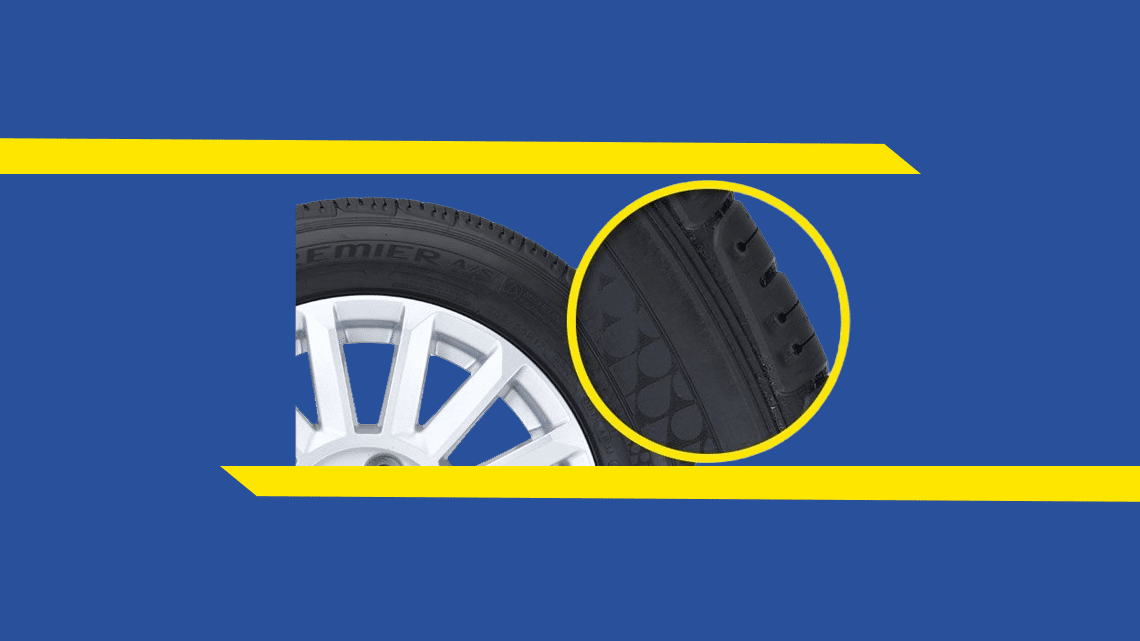
Symptom: Worn
View more -

How to Inspect Tires
View more -

Symptom: Vibration
View more -

Symptom: Pulling to One Side
View more -
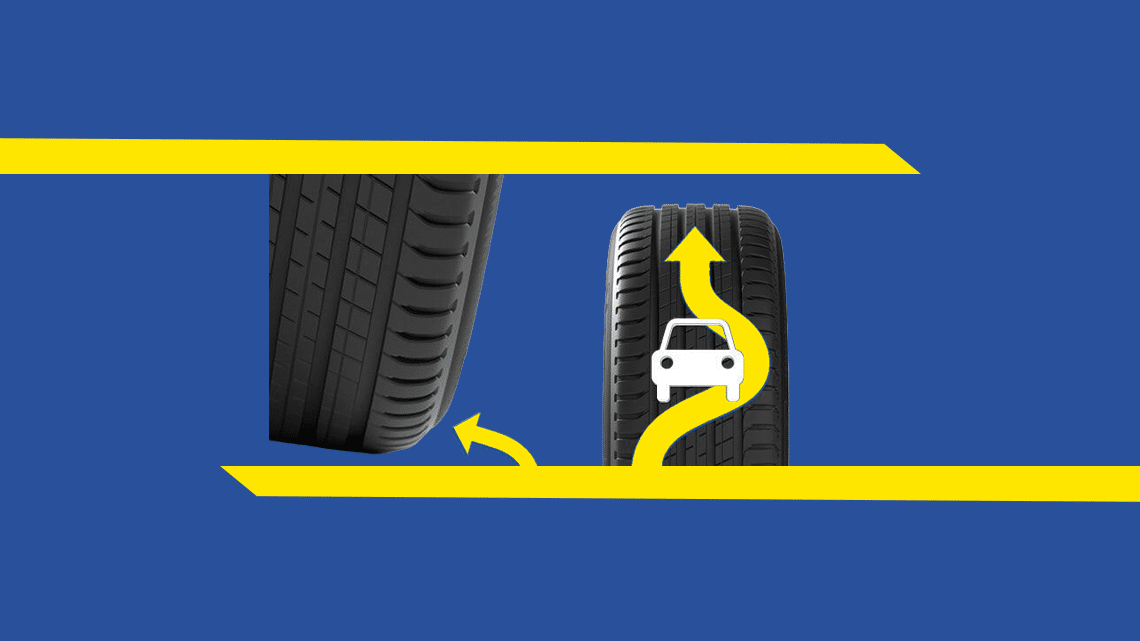
Symptom: Steering Problems
View more -
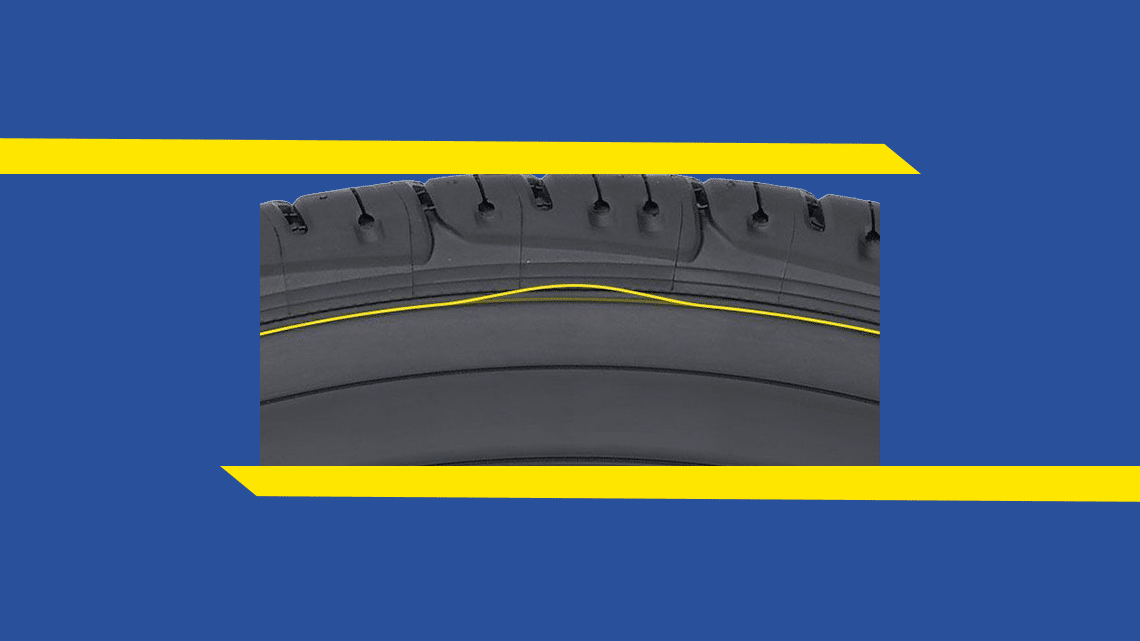
Symptom: Indentation
View more -

Wear Problems
Wear concentrated in the center of the tread means the tire has been chronically overinflated. Wear on both outer edges means chronic underinflation. Wear on one edge only points to an alignment problem. Cupping or scalloping across the tread surface suggests a balance or suspension issue. Each pattern identifies a specific, fixable cause, and addressing the cause before replacing the tire prevents the same pattern from destroying the replacement.View more -
Sidewall Problems
Use Michelin's Sidewall Inspector to identify what you are looking at before deciding whether to drive the vehicle. An indentation where cords overlap inside the tire is a normal manufacturing feature and completely harmless. A protrusion or bubble indicates an internal structural failure and means the tire must be replaced immediately. The tool provides a clear, specific recommendation based on your description, including when to pull over without driving further.View more -
Handling Problems
Describe your handling symptom to Michelin's Inspector Tool and it narrows the likely cause systematically. Speed-specific vibration points to imbalance. A consistent pull after pressure has been equalized points to alignment. A pull that occurs only during braking points to the braking system. The tool asks the diagnostic questions that distinguish between tire issues and mechanical ones, so you can book the right service appointment rather than a general inspection.View more -
Tread Problems
The Tread Inspector module helps you interpret what you see on your tread surface. Center wear confirms chronic overinflation. Edge wear on both sides confirms chronic underinflation. One-sided wear confirms an alignment problem. If you find a nail, the tool will tell you what not to do: do not pull it out yourself. Drive carefully to a professional, have the tire removed from the wheel, and have a proper internal inspection and patch-and-plug repair performed.View more -
Symptom: Poor Alignment
View more -

Symptom: Wear on Both Edges
View more -

Symptom: Wear in Center
View more