- Remain calm and do not panic; it will help you make rational, calm decisions.
- Try to brake in a straight line if possible.
- If you are driving at a high speed when the emergency occurs, try to avoid sudden steering since it may result in accidents that can otherwise be avoided.
- You can steer far more effectively at slower speeds. Slow down as much as possible to reduce the impact of a potential collision.
- Your main priority is to save lives. If an accident is unavoidable, take priority actions that ensure the safety of human life first.
- Turn on your hazard lights as soon as possible.
- Make sure you have emergency numbers and insurance numbers on hand at all times.
FIND A DEALER
FAQ
Read our Frequently Asked Questions.
Maintain control of the vehicle before anything else. The number-one instinct people fight in emergencies is panic braking or overcorrection—both of which make the situation worse in almost every scenario. Blowout, skid, brake failure, steering loss: in every case, your first action should be to grip the wheel, resist the urge to slam the brakes, and focus on where you want the vehicle to go rather than what you're trying to avoid. Seconds of controlled response can be the difference between a manageable situation and a collision.
Look where you want to go, not at what you're avoiding—your hands follow your eyes.
Use smooth, deliberate steering inputs—overcorrection is a leading cause of secondary crashes.
Maintain as much following distance as possible in all conditions—it's your reaction time buffer.
Brake firmly and progressively with ABS-equipped vehicles; pump brakes gently with non-ABS.
Flash your hazard lights to warn drivers behind you of the emergency ahead.
Inspect your tires for damage, punctures, embedded objects, and pressure loss.
Check for any fluid leaks under the vehicle.
Assess handling: any pulling, vibration, or unusual steering feel indicates possible damage.
If you hit a curb, pothole, or guardrail—even at low speed—have alignment and suspension inspected before highway driving.
Replace any emergency kit items used.
Report significant hazards (debris, black ice, damaged road) to 511 or emergency services.
With ABS: press the brake pedal firmly and hold it down—do not pump. ABS modulates brake pressure automatically faster than any human can, preventing wheel lockup while maintaining steering control. You may feel the pedal pulsating; this is normal. Without ABS: apply firm pressure and pump the brakes rapidly to prevent lockup, which would cause a skid and loss of steering. In either case, steer toward safety while braking—with ABS you retain steering control; without ABS you need to time your steering with the release strokes.
A heavily loaded vehicle takes significantly longer to stop and handles differently in emergencies. The added weight increases momentum, which requires more braking force and longer distances to stop—particularly relevant for families loading vehicles for road trips or drivers with trailer attachments. Overloaded vehicles also put more stress on tires, increasing the risk of blowout. Before any loaded trip, check that your tires are inflated to the loaded pressure specified on the door placard, verify your tire load ratings against your total vehicle weight, and build in larger following distances.
Related articles
-
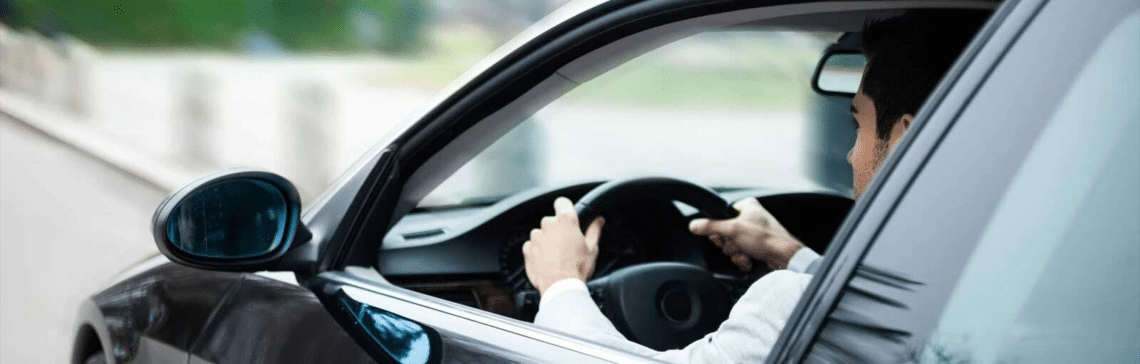
Steering Control
If a front tire blows out, your instinct will be to brake hard. That instinct is wrong and will make the situation significantly worse. The correct response is to grip the wheel firmly, hold the accelerator briefly to stabilize the vehicle, then ease off gradually and steer toward the shoulder as speed drops naturally. This page explains the specific counterintuitive technique for blowouts, skids, and hydroplaning, each of which requires a different but deliberate response.View more -
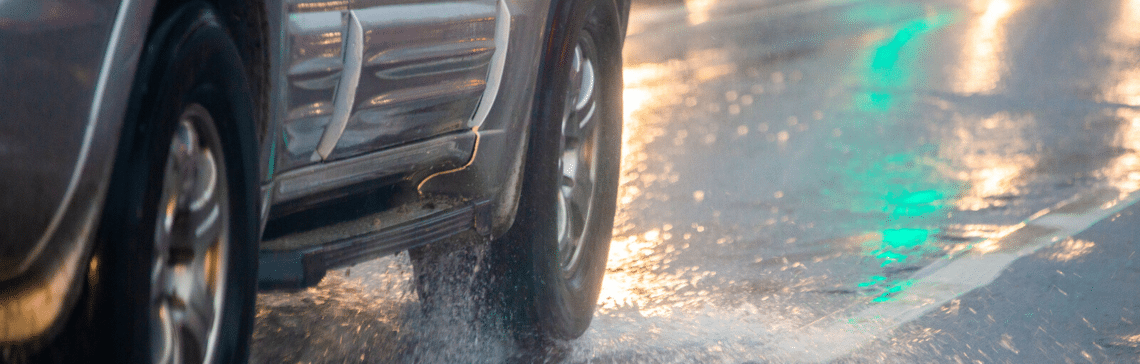
Brake Problems
If your brakes suddenly feel soft or lose pressure while driving, pump the pedal rapidly to try to build hydraulic pressure, look for a safe exit from the road immediately, and apply the parking brake gradually only as a last resort. This page also covers the warning signs to watch for before brake problems become critical: a spongy pedal, grinding noise, pulling to one side during braking, and a pedal that sits closer to the floor than usual.View more -
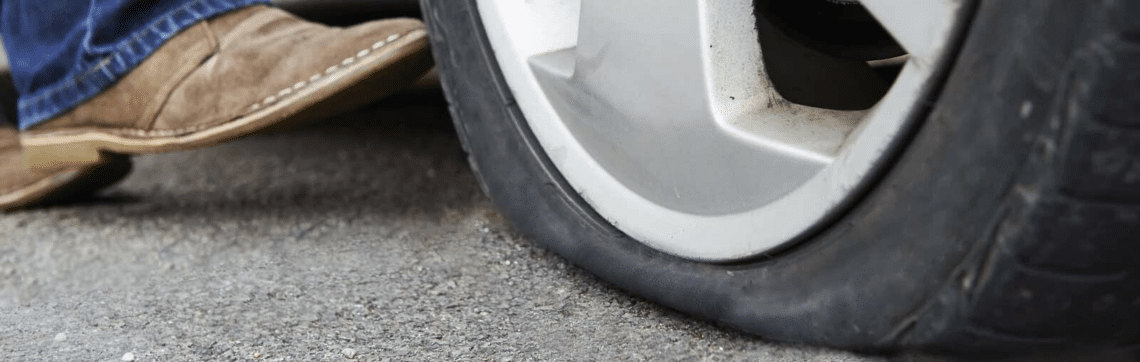
Tire Blowout
Do not brake hard during a blowout. The sudden pull toward the failed side combined with hard braking can cause a spin or roll. The correct response: grip the wheel firmly, maintain your speed briefly to stabilize, ease off the throttle gradually, and steer progressively toward the shoulder as speed drops naturally. This page explains why this approach works, the causes most responsible for blowouts, and the maintenance habits that significantly reduce your risk.View more -
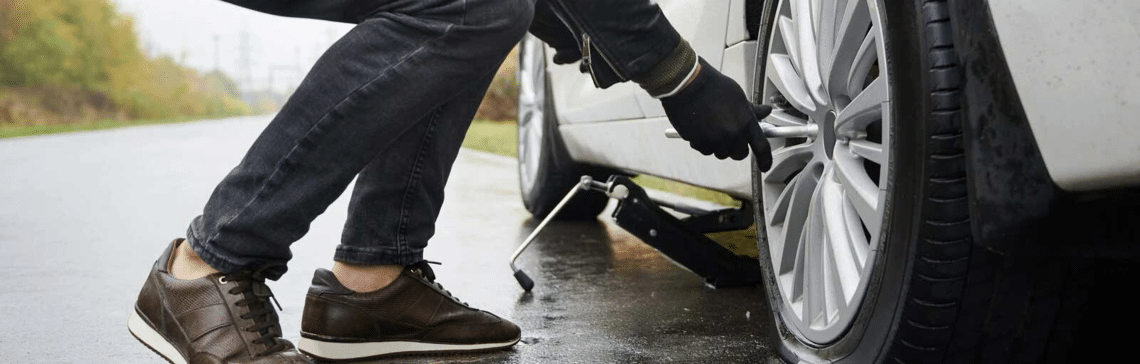
Car Emergency Kit
Your emergency kit needs to answer three questions: Can you be seen by approaching vehicles? Can you stay warm if stranded? Can you move the vehicle or call for help? The core items are warning triangles or reflective flares, a thermal blanket, a portable jump starter or jumper cables, a flashlight with spare batteries, a small shovel, traction aids, and roadside assistance contact details written on paper. For winter travel, add warm spare clothing and extra traction materials.View more