Check your tire pressure
It is essential to check your tire pressure every two weeks when the tires are cold (i.e. a tire that has not run for at least two hours or has run for less than 2 miles at a reduced speed). Ensure that you make adjustments if you take the pressure after riding, i.e. with "hot" tires. In this instance, refer to the manufacturer's recommendations.
Never deflate a hot tire
Don't forget to replace the valve caps after your checks are complete
Tires filled with nitrogen must still be checked regularly
Stick to the tire pressures recommended by the manufacturer
These recommendations are applicable for tires used on the road. There are additional recommendations for use on the racetrack and more generally for any race.
FAQ
Read our Frequently Asked Questions.
Michelin recommends checking before every ride. At minimum: every two weeks and before any long journey. Motorcycle tires are significantly more pressure-sensitive than car tires—the smaller air volume means the same pressure loss has a greater percentage effect, and the dynamics of a two-wheeled vehicle make pressure-related handling changes more pronounced and dangerous. A difference of 3 psi on a motorcycle is far more significant than the same difference on a car.
Always when cold—before riding, or after the motorcycle has been parked for at least 3 hours and traveled fewer than 5 km at low speed. Riding heats the air inside the tire, increasing pressure by 4–6 psi or more. Checking after a ride and deflating to the cold spec would leave the tire dangerously underinflated once it cools. Never bleed air from a hot tire. If you must check pressure mid-ride (refueling stop, for example), note that the reading is 4–6 psi above cold spec and adjust your mental reference accordingly.
The motorcycle owner's manual is the authoritative source—it specifies front and rear cold pressures for solo riding and typically an adjusted pressure for riding with a passenger or loaded with luggage. Some motorcycles have a sticker on the swingarm or frame. The maximum pressure marked on the tire sidewall is not the operating pressure—it's the maximum the tire can contain. Michelin strongly advises against using the tire sidewall maximum as an operating pressure. Always use the vehicle manufacturer's specification.
Underinflation: sluggish, vague handling; reduced cornering grip; increased rolling resistance; excessive heat buildup; accelerated shoulder wear; risk of sudden failure at high speed.
Overinflation: harsh, nervous ride; reduced contact patch; decreased grip; increased vulnerability to impact damage; accelerated center tread wear.
Mismatched front/rear pressure: handling imbalance—the motorcycle will feel different on left versus right lean, and may feel unstable.
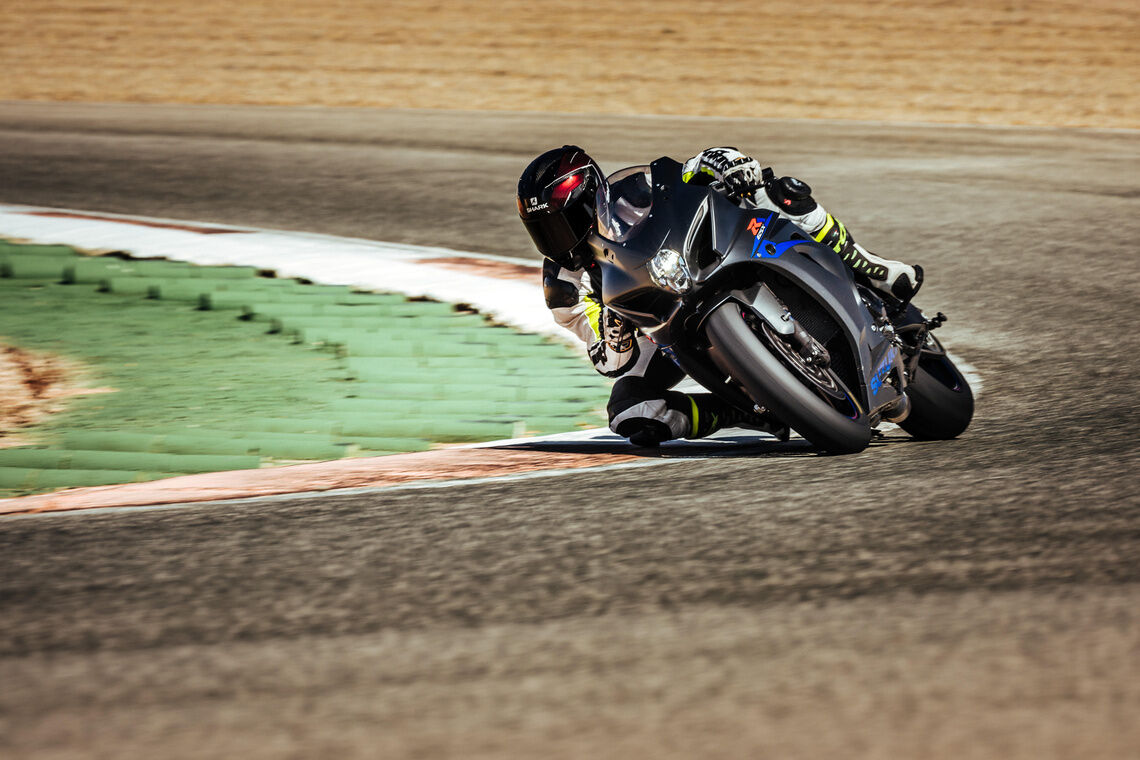
No—track pressures are different from road pressures and should be set according to your tire manufacturer's track recommendations, which vary by tire model. On track, tires reach higher temperatures and the optimal pressure is typically lower than road spec to compensate for the heat-related pressure increase. However, starting cold on a track with road pressure is generally safe for the first few laps before adjustments. Never use track-warm pressure settings on road—the reduced pressure setting for track operation would leave you significantly underinflated on cooler road conditions. This is covered in more detail on the Tire Pressure on Track page.
Related articles
-

Tire wear and tear
Why do some tires wear out faster than others?View more -
Keep your tires safe
View more -
When should I change my motorcycle tires?
View more -
Why are motorcycle tires important?
Tires are an important part of what defines the shape and balance of a motorcycle or scooter.View more -

Off-Road
View more -
Track tires recommended pressure
SET THE RIGHT PRESSURE FOR YOUR MOTORCYCLEView more