Your safety comes first: Check your tires
Worn tires can ruin your vehicle's performance and even endanger you or your loved ones. It is recommended that you do a weekly inspection to check:
The state of the tires
The depth of the treads
Any damage due to impacts or any sign of unusual wear.
You are also advised to check your tire pressure twice a month.
If in doubt, always ask for expert advice!
Six reasons to change your tires
1. The tire has a puncture
Tires are durable and designed to withstand impacts, but they sometimes puncture. If you get a flat tire, it should be replaced by a professional mechanic.
2. The legal tread wear limit has been reached
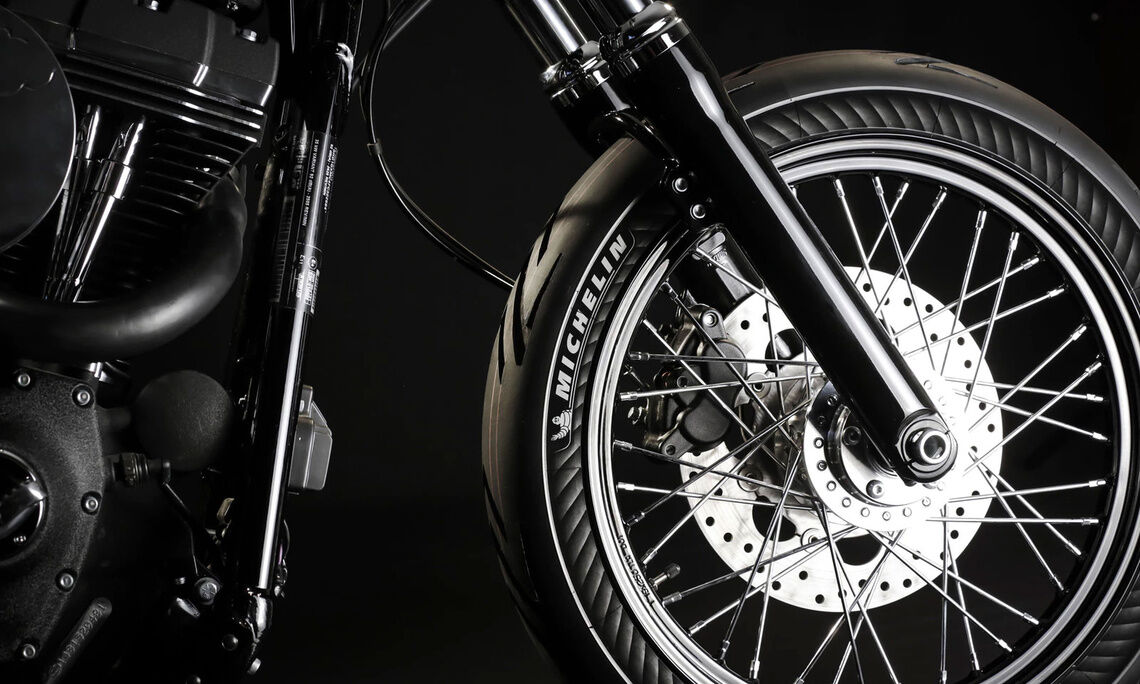
A Michelin Man symbol on the upper side of your tires means that they feature a tread wear indicator. Similar to little bumps, these can be found at the bottom of the main grooves.
When the rubber has worn down to this level, the tire has reached its legal wear limit of 2/32nds. Michelin strongly advises you to change your tires before reaching this point. Past this point, there is no guarantee that your tires will keep you safe or deliver grip and performance, particularly on wet surfaces.
3. Tires show signs of aging
It is difficult to predict a tire's lifespan because it bears no relation to its manufacturing date. Tires that have never been used, or have only been used infrequently, may still show signs of aging. Many factors can affect their lifespan: weather conditions, storage and usage conditions, load, speed, tire pressure, maintenance, riding style, and so on.
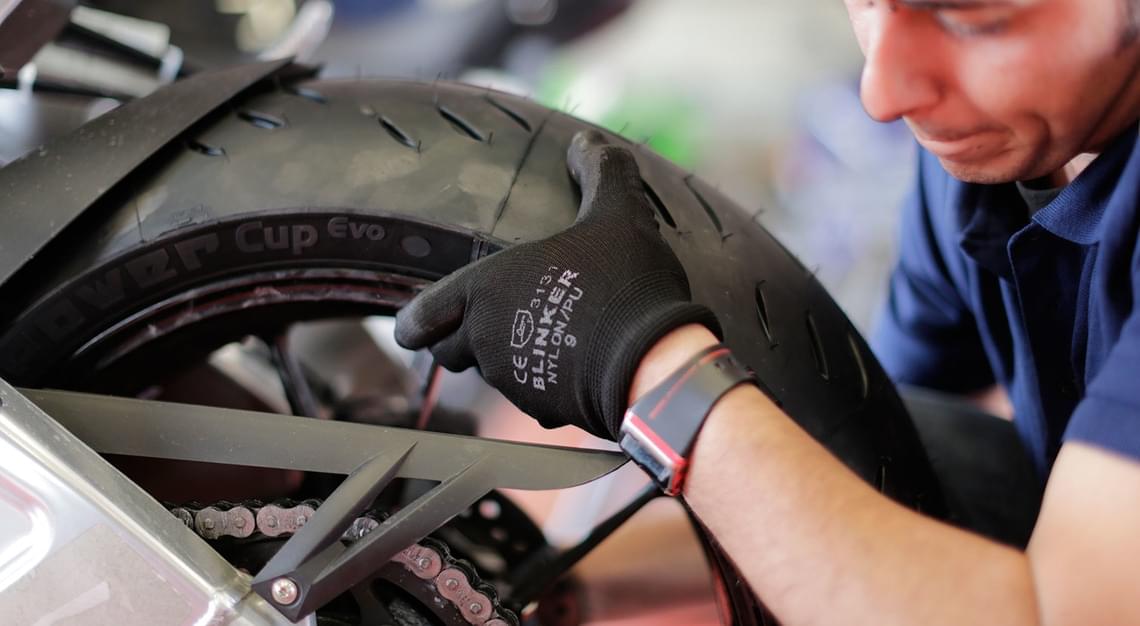
Michelin recommends that all riders regularly spend some time inspecting their tires to pick up on any external signs of aging or wear, such as deformations or cracks in the tread, on the shoulders or sides.
You should also have your tires checked by a professional who can assess if they should be replaced or not.
The 5 year test… before it's too late!
After 5 years or more of use, tires should be examined every year by a professional mechanic. If the tires need to be changed, follow the manufacturer's recommendations with regard to replacing original components. As a precaution, all tires that have not been replaced after ten years should be changed, even if they appear to be in a generally good condition and have not reached their tread wear limit.
4. The tire is damaged
Pavements, holes or blunt objects can seriously damage tires. All tears, cuts or deformations should be carefully examined by a professional mechanic.
As a general rule, don't ride on damaged or flat tires. If the tire contains a puncture, it should be replaced.
When is a tire damaged beyond repair?
Punctures to the sides of the tire
Deformed or visible beads
Tread rubber becoming unstuck or deformed
Wear leading to a visible breaker or carcass under the treads or on the side
Damage due to oils or corrosive substances
Marbling or scratches to the inside faces as a result of riding with insufficient tire pressure.
5. The tire shows an unusual pattern of wear
Unusual wear of the tire treads – localized in certain places, in the center or on the shoulders – is often a sign of a mechanical problem (worn shock absorbers, transmission, fixings, etc.) or a balance issue. It can also occur as a result of incorrect tire pressure.
To prevent unusual wear, check your wheel balance every six months. This will prolong tire life and ensure a more comfortable ride. Aside from this, your tires may seem excessively worn for their mileage compared with other motorcycles ridden in the exact same conditions.
If this happens, contact your specialist.
6. You have the wrong tires for your vehicle
Choose your tires in accordance with legal requirements and the kind of equipment recommended for your vehicle. For optimal performance, use tires with the same tread pattern for the front and back. Tires that have different designs, treads and wear patterns might affect the vehicle's balance and stability. Never fit a vehicle with one radial tire and one non-radial tire unless specified by the manufacturer.
When the time comes to change your tires, check out our tire selector or consult one of our specialists to be sure you make the right choice.
FAQ
Read our Frequently Asked Questions.
Tread wear indicators reached: when the tread surface is level with the TWI (1 mm), replace immediately. Michelin recommends replacing before this point.
Visible cords or fabric: any exposure of internal structure means immediate replacement.
Sidewall damage: cuts, bulges, or significant cracking—replace immediately.
5+ years old: have inspected annually by a professional mechanic.
10+ years old: replace regardless of appearance or remaining tread.
Performance changes: noticeably reduced grip in wet conditions, increased stopping distances, or less confident handling in corners.
No reliable universal mileage guide exists for motorcycle tires because lifespan varies enormously: sport tires may last 3,000–8,000 km; sport-touring tires 15,000–25,000 km; touring tires up to 30,000+ km. Factors include riding style (aggressive vs. conservative), vehicle weight, road conditions, tire pressure maintenance, and storage. Rather than counting kilometres, Michelin recommends monitoring tread depth at multiple inspection points, watching for performance changes, and assessing rubber condition as the primary replacement indicators.
Yes—replace as a matched pair whenever possible. Front and rear tires are designed as a system; replacing only the more-worn tire introduces a mismatch in profile, compound, and wear state that affects handling balance. If budget requires replacing one tire, install the new tire on the rear axle (the more critical tire for power and stability) and ensure the remaining front tire has adequate depth and condition. For safety-critical motorcycles (sport bikes, heavily loaded tourers), matched replacement is particularly important.
Yes. Rubber ages through oxidation and UV exposure regardless of mileage. A tire stored for 5 years on a garage-kept bike has aged even if it has minimal tread wear. Michelin recommends professional inspection after 5 years of service (regardless of use) and replacement at 10 years regardless of appearance. Age-related degradation is insidious—the rubber hardens, loses flexibility, and may crack internally before visible surface cracks appear. A 'barely used' 8-year-old tire is not a safe tire.
Very significantly. Hard acceleration wears the rear tire center rapidly. Aggressive cornering at high lean angles wears the tire shoulders. Combined sport riding (acceleration + cornering) is extremely demanding on rear tires. A sport rider covering 10,000 km may need tire replacement twice, while a gentle touring rider covering the same distance may get 2–3 times the tire life. Understanding this relationship helps predict and budget for replacement cycles: aggressive riders should inspect tires more frequently and plan for earlier replacement regardless of mileage.
Related articles
-

Tire wear and tear
Why do some tires wear out faster than others?View more -
Keep your tires safe
View more -
Why are motorcycle tires important?
Tires are an important part of what defines the shape and balance of a motorcycle or scooter.View more -
Tire pressure for your motorcycle
Make sure you check your tire pressure at least once a month and before any long journeys.View more -

Off-Road
View more -
Track tires recommended pressure
SET THE RIGHT PRESSURE FOR YOUR MOTORCYCLEView more