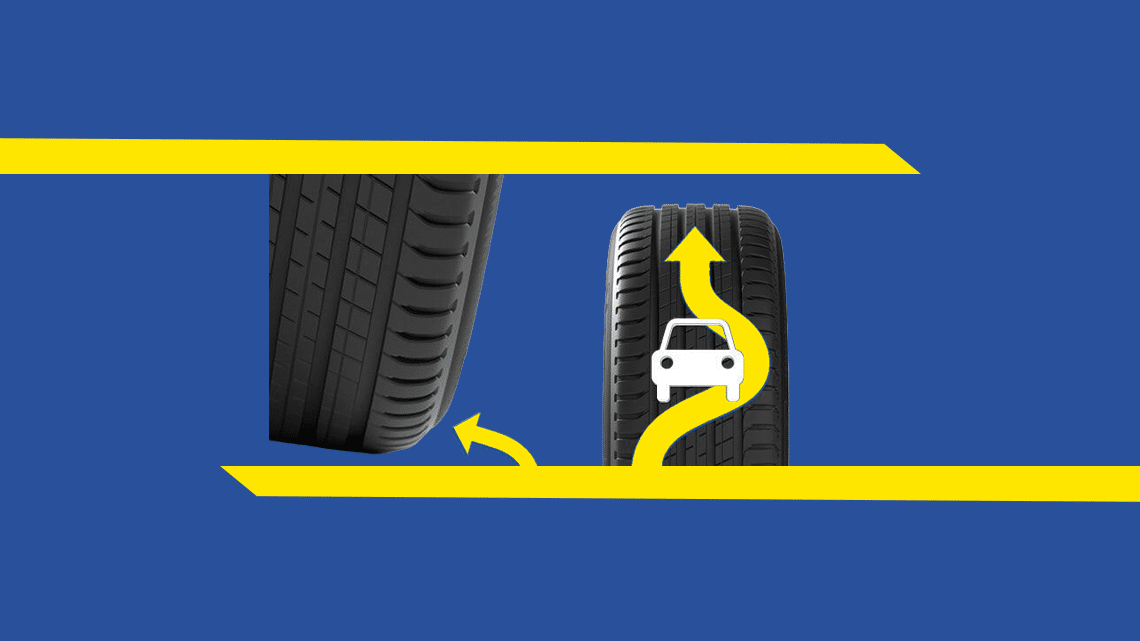
Symptom: Vibration or Shimmy
Diagnostic: Tires Out of Balance OR Steering & Suspension System Malfunction
Tires that are out of balance can cause a vibration that can lead to driver fatigue, premature or uneven tire wear, and unnecessary wear and tear on your vehicle's suspension. Tires should be balanced when they are mounted on wheels for the first time or when they are remounted after being repaired.
Solution:
The solution could be as simple as rebalancing your tires.
Visit your tire professional at the very first sign of vibration or "shimmy".
If rebalancing doesn't eliminate the vibration, have the alignment and/or suspension system components checked.
Tires should be balanced when they are mounted on wheels for the first time or if they have to be removed and remounted.

FIND A DEALER
FAQ
Read our Frequently Asked Questions.
Out-of-balance tires: the most common cause of steering wheel vibration at highway speeds (typically 80–120 km/h). Fix: balancing.
Uneven tread wear: flat spots or cupped tread create rhythmic vibration. Fix: rotation and addressing the root cause.
Flat spotting: tires develop a flat area after sitting stationary for extended periods. Usually self-corrects after 15–20 minutes of driving at highway speeds.
Wheel alignment issues: misalignment causes uneven wear and can create pull and vibration.
Suspension component wear: worn shocks, struts, or wheel bearings cause vibration that feels similar to tire issues but won't be resolved by tire work.
Tire-related vibration: typically speed-dependent (appears or worsens above a specific speed, often 80–100 km/h) and felt through the steering wheel. Imbalance vibration often diminishes at even higher speeds due to harmonic effects. Suspension vibration: may be more consistent across speeds or appear during specific manoeuvres (braking, cornering), and is felt through the seat or floor rather than primarily the steering wheel. A tire shop can isolate the source by checking balance, runout, and inspecting suspension components—don't just balance the tires if the vibration returns quickly.
Flat spotting occurs when a tire sits in one position under load for an extended period—the contact area develops a slightly flat section as the rubber conforms to the ground. Temporary flat spotting is common after winter storage or long parking periods, and typically resolves after 15–20 minutes of highway driving as the tires warm up and the rubber relaxes. Semi-permanent flat spotting can develop in tires stored overinflated, in high heat, or under excessive load. This type may not fully resolve and can cause persistent vibration requiring tire replacement.
Yes. Persistent vibration accelerates wear on multiple vehicle components. Wheel bearing wear increases significantly with sustained vibration from imbalanced wheels. Suspension components (shocks, struts, tie rods) are stressed by uneven road inputs from cupped or improperly balanced tires. Steering system components wear faster. The vibration itself can also cause brake rotor damage over time. Addressing vibration early—typically a $20–50 balance service—prevents hundreds or thousands in downstream repair costs.
Vibration only during braking usually indicates warped brake rotors rather than a tire problem. Warped rotors cause a pulsating or shuddering feeling through the brake pedal and steering wheel when stopping. This can be caused by overheating brakes (prolonged braking on descents, stuck calipers) or abrupt cooling (driving through water with hot brakes). However, it's worth checking tire balance and alignment too, as both can contribute to uneven rotor wear. Have a qualified shop inspect both the brakes and tires if vibration on braking is new or worsening.