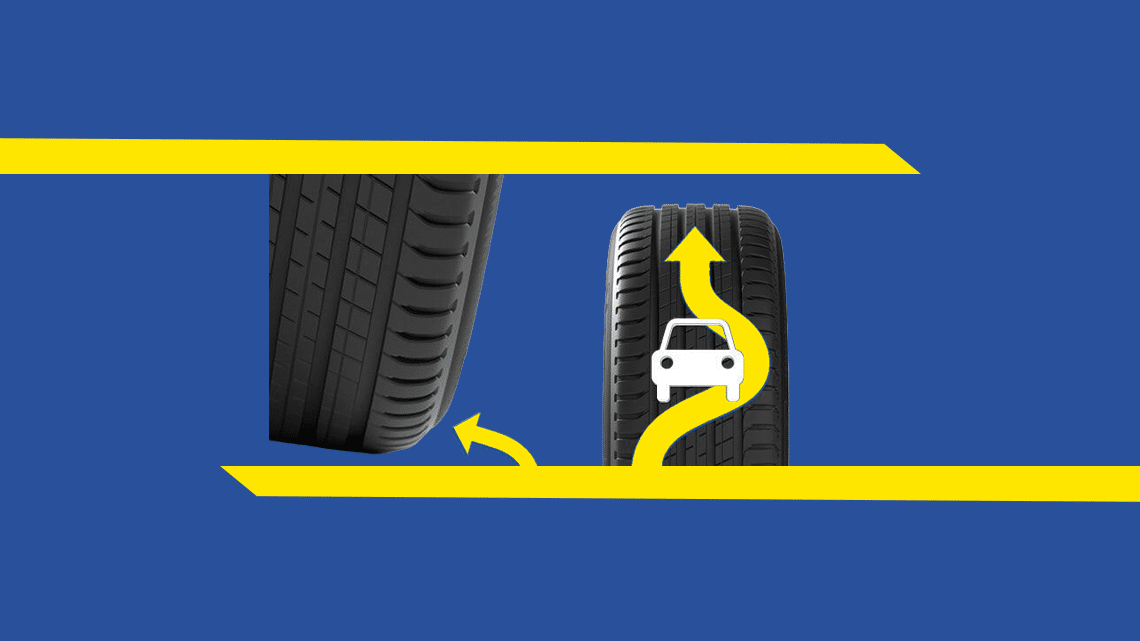
Symptom: Steering Problems
Diagnostic: Tire damage that requires repair
Most punctures nail holes or cuts up to ¼" confined to the tread may be repaired by a tire professional using industry-approved procedures.
An on-the-wheel plug-only repair is not reliable and is dangerous because after a puncture the inside of a tire must be inspected.
Solution:
Visually inspect each tire for noticeable damage. If found, replace that tire with your spare and take your vehicle into your local authorized Michelin retailer for an inspection as soon as possible. If you cannot find any damage, either call for roadside service or drive immediately (and under the speed limit) to your closest tire retailer.

FIND A DEALER
FAQ
Read our Frequently Asked Questions.
Vague or imprecise steering: the car doesn't respond crisply to steering inputs—can indicate underinflation, worn tires, or alignment issues.
Floating or bouncy feel at highway speeds: typically suspension-related (worn shocks/struts) but also appears with severely underinflated tires.
Excessive body roll in corners: suggests worn suspension, but also worsened by underinflation.
Hydroplaning at lower than expected speeds: worn tread that can't evacuate water effectively.
Longer braking distances: worn tread, underinflation, or mismatched tire types.
Unpredictable behavior in emergency manoeuvres: often the most dangerous manifestation of overall tire and suspension degradation.
Yes, more than most drivers appreciate until they experience a properly set up vehicle. The difference between a tire at the correct pressure versus 20% underinflated can be felt in steering response. The difference between fresh tires and tires at 2/32" tread is dramatic in wet conditions. Many drivers attribute 'lazy' handling to their vehicle type or age when the actual cause is worn or underinflated tires. The simplest handling improvement available to any driver is correct tire pressure and adequate tread depth.
Sudden changes in handling should always be investigated. Causes can include: a tire losing pressure (slow puncture), a tire that has sustained recent damage from an impact, a change in road conditions (winter road treatments affecting traction), or a mechanical issue that's developed. Check tire pressures first—this takes two minutes. If pressures are correct and the handling change persists, inspect tires visually for damage and book a professional inspection. Handling changes that appear without explanation are warning signs, not something to wait out.
Yes. Tires from different brands or tire lines can have different tread patterns, compounds, and rolling radii. When the four tires behave differently, the vehicle's handling becomes less predictable—particularly in emergency situations where all four tires need to respond uniformly. Cornering stability, wet traction distribution, and ABS/traction control calibration all assume relatively uniform tire behaviour. Mismatched tires can cause unexpected oversteer or understeer that surprises even experienced drivers.
Both. Misalignment causes tires to scrub (wear on an angle) which accelerates wear—but it also directly affects handling. Even mild misalignment creates a persistent steering pull, increases steering effort, and can make the vehicle wander on straight roads. Severe misalignment makes the vehicle feel unstable in corners and reduces confidence in emergency situations. An alignment service ($80–150) restores the vehicle to its designed handling specifications while simultaneously protecting tire longevity.