What Types of Tires Are Affected?
This issue primarily concerns high-performance tires, such as those used in extreme conditions like competitive racing. These tires are engineered to operate at very high temperatures on the track, making them more vulnerable to damage from cold conditions. Proper handling and storage are critical, as we’ll explain below.
Motorcycle tires designed for other purposes—such as for road, off-road, or commuting use—are built differently. They do not heat up as much during use, making them less susceptible to cold and requiring fewer precautions.
Why Are Competition Tires Affected by Cold Temperatures?
High-performance tires are slower to reach their optimum operating temperature compared to conventional road tires. This is why tire warmers are often used before a race, ensuring the tires are at the right temperature from the start.
Despite their ability to withstand higher stresses and extreme heat, competition tires are more sensitive to cold temperatures. Improper storage or exposure to freezing conditions can result in cracks or structural damage, rendering the tires unsafe.
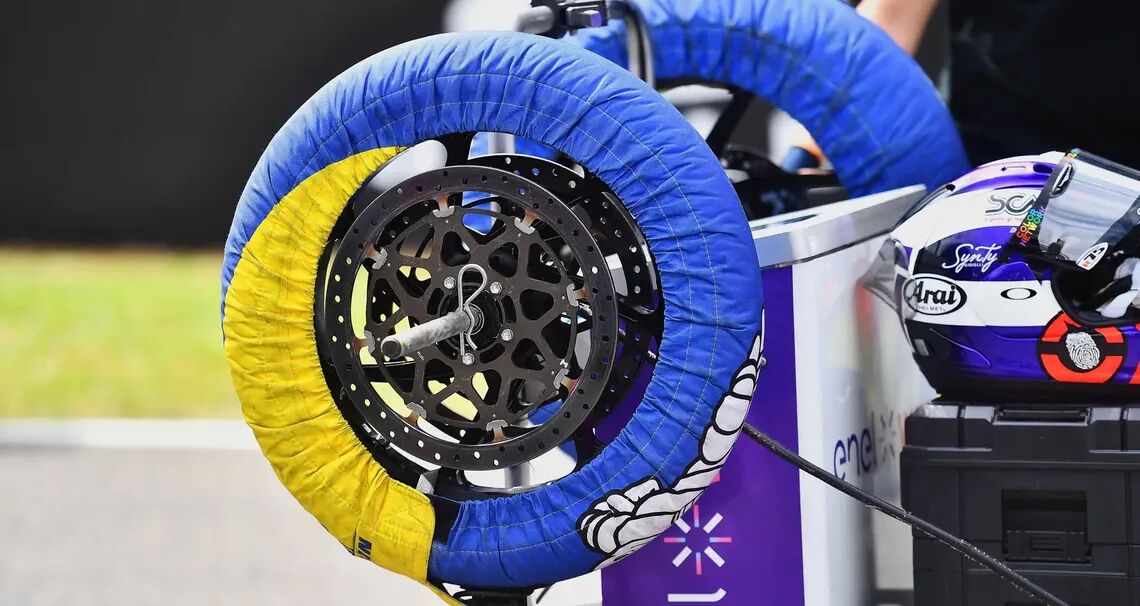
Tire warmers are essential for bringing tires to the correct operating temperature before a race begins. Proper preheating ensures maximum grip and performance right from the start.
The more specialized a tire is, the greater the risks associated with temperature variations. For track tires, the extremely high temperatures they experience—due to the significant grip levels—require a carefully engineered blend of tire compounds.
Thanks to this specialized compound blend, these tires can maintain optimal performance even when heated to 150°C (302°F). However, this impressive heat tolerance comes with a downside: sensitivity to cold temperatures.
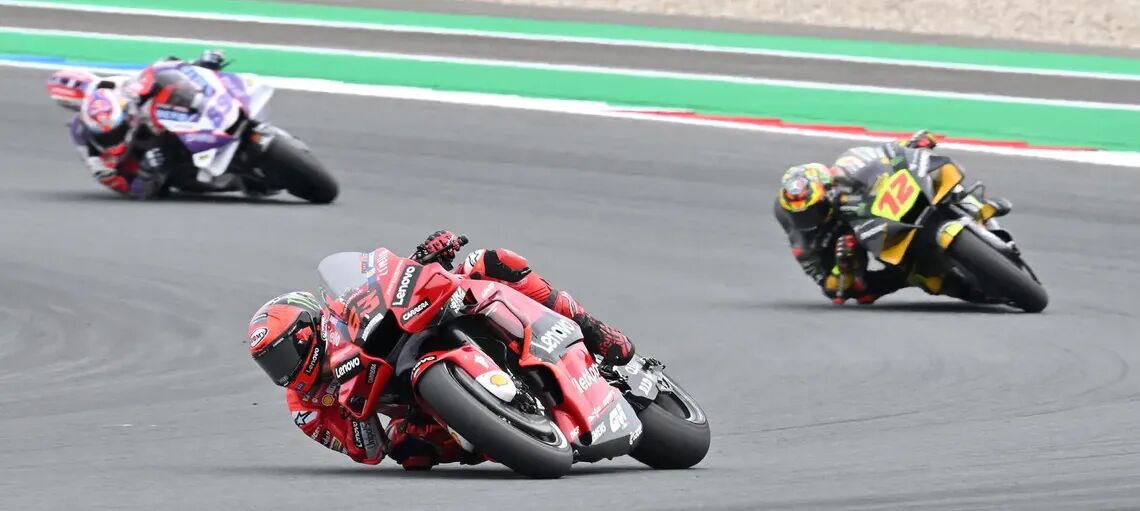
Thanks to a specific blend of compounds, high-performance tires maintain excellent grip and performance even when subjected to extreme heat, reaching temperatures of up to 150°C (302°F).
The downside is that these tires must not be exposed to cold temperatures. Handling them when cold may result in the tread or other rubber areas breaking as if they were glass.
Therefore, care must be taken to store the tires in appropriate conditions to avoid exposure to freezing temperatures. If this occurs, the tires should not be handled at all.
The Breaking Point
Every tire manufacturer faces this problem: when temperatures reach certain extremes, tires inevitably lose their performance and risk irreversible damage.
There is a low-temperature threshold at which rubber loses elasticity and becomes brittle. This is called the breaking point.
Rubber breakdown in the cold can appear inside the tire and remain invisible. It may manifest as:
Tiny cracks, or
Many larger cracks around the tire.
The Impact of Temperature on Performance
A tire that has been subjected to low temperatures loses its grip performance.
There is also a high-temperature threshold, known as the reversion point, at which the rubber becomes soft and viscous. If the tire temperature exceeds this threshold, its performance will also be reduced.
Fortunately, the vast majority of our tires operate reliably within these thermal limits without issue.
Different Temperature Thresholds for Tire Ranges
As shown in the table below, different ranges of Michelin track tires have varying tolerance levels:
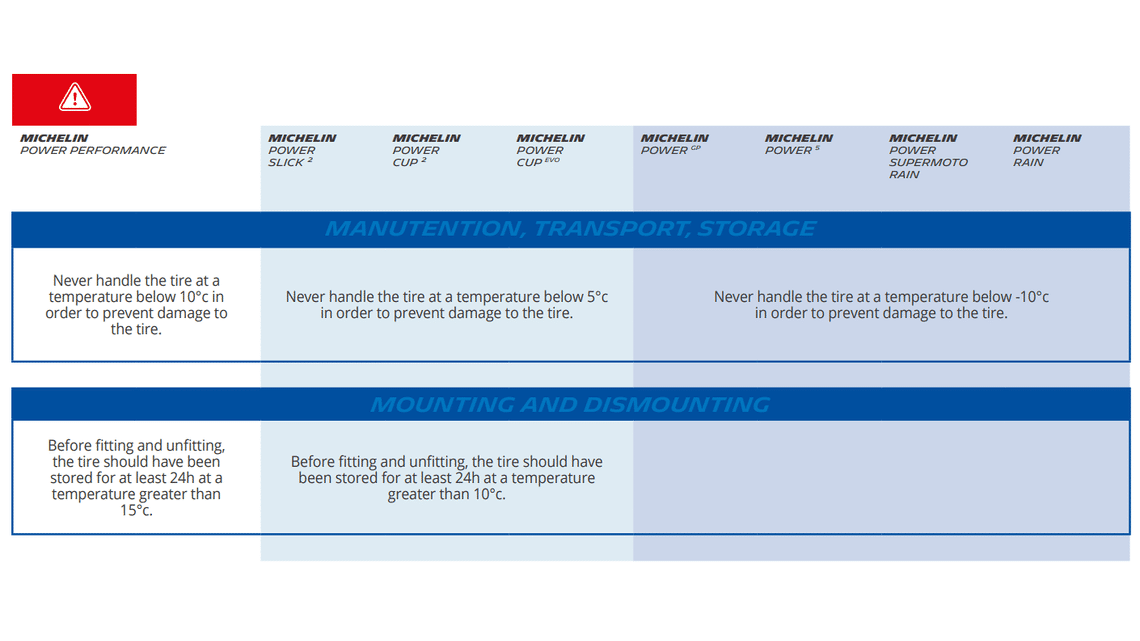
Michelin Power Performance range: Must not be handled below 10°C (50°F) during transport and storage.
Michelin Power Slick², Power Cup², and Power Cup EVO ranges: Should not be handled below 5°C (41°F).
Michelin Power GP, Power 5, Power SuperMoto Rain, and Power Rain / Rain+ ranges: Can tolerate temperatures as low as -10°C (14°F).
Storage and Mounting Recommendations
To avoid damage:
Store Michelin Power Performance tires for at least 24 hours in an environment with a temperature above 15°C (59°F) before mounting or dismounting.
For Michelin Power Slick², Power Cup², and Power Cup EVO ranges, ensure the ambient temperature is above 15°C (59°F) for more than 24 hours before handling.
Proper storage and handling ensure optimal tire performance and longevity.
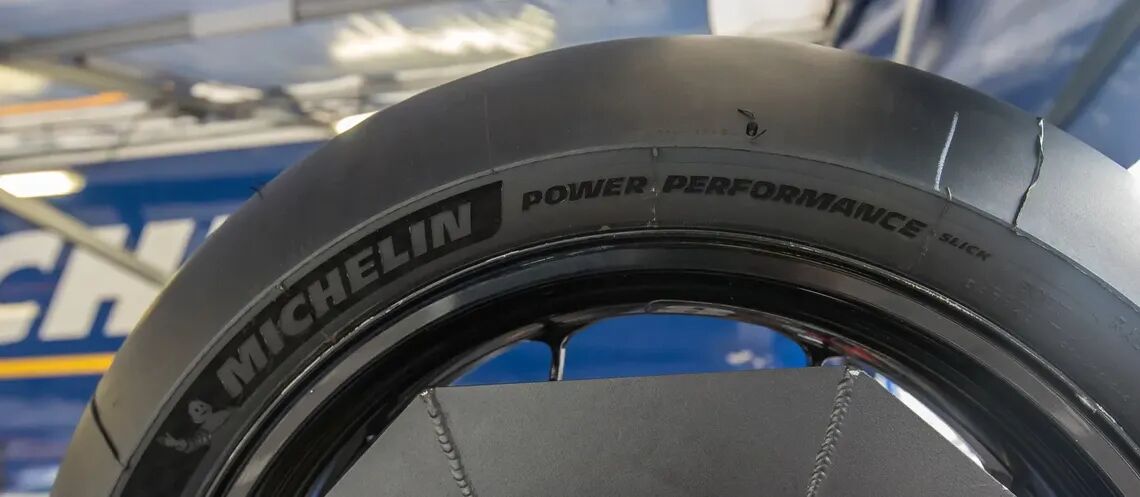
How Do You Know the Temperature of Your Tires?
To check the temperature of a tire, simply use a conventional thermometer. If the tire has been stored in a room for several hours, its temperature can be assumed to be the same as the ambient temperature.
Excellent Performance on the Track
By following these simple precautions, you can enjoy excellent performance and unparalleled pleasure while riding your motorcycle on the track!
Choose the Best Track Tires for Your Motorcycle

Michelin POWER PERFORMANCE SLICK
Benefits from the latest MotoGP™ tire technologies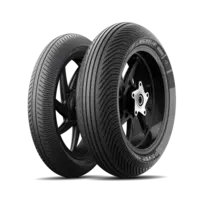
Michelin POWER RAIN
The 100% track tire specifically designed for wet surfaces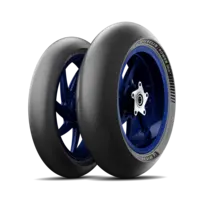
Michelin POWER SLICK 2
Step up to Michelin’s next level of grip for even shorter lap times(1)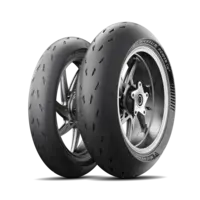
Michelin POWER CUP 2
Increase your track time while lowering your lap times!(1)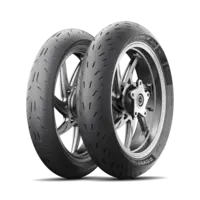
Michelin POWER CUP EVO
Maximum riding pleasure for track and street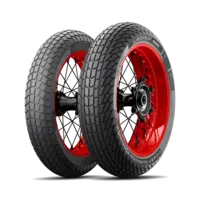
Michelin POWER SUPERMOTO RAIN
The leading SuperMoto World Championship range


