Gas car noises: what are the sounds made by a combustion-powered vehicle?
In a combustion-powered vehicle, the main car noise a driver hears (except if there is an issue with the vehicle) is the engine. This car noise is the result of thermodynamics: as heat energy is transformed into mechanical energy to propel the car, the engine’s cylinders produce pulsations (sounds) that are emitted via the exhaust valve.
Electric car noises: what to expect?
Are electric cars quieter than gas cars? An electric vehicle, by its very nature, doesn’t have an engine. Instead, it has a motor system powered by a battery. Unlike thermodynamics, electromagnetics doesn’t result in noise emissions. As a result, the motor is almost totally silent.
Perhaps even too silent! Electric vehicles are much quieter than gas cars. At low speeds they are so much quieter that.
Tire noise when driving an electric car
The electric car noise that you will hear, however, is the tire noise: the sound of the tires rolling over the road surface (which is often described as a low roaring sound in the car, a bit like a background noise).
Do electric car tires make more noise than combustion-powered ones? No, If you hear more the tire rolling over the road surface, it’s because an electric motor makes almost no noise. You become more sensitive to any additional noise.
This tire noise depends on the condition of the road that generates vibrations in the cabin. Even on the highway you don’t always find the same kind of road surface. And it’s here that tire, and automobile manufacturers have a real challenge on their hands.
Whistling sound from car
Tire noise also depends on the speed you drive. The faster you drive, the more you hear a whistling sound from the car.
This is something Michelin works very hard on in order for drivers to enjoy the electric experience.
For Michelin, the solution to minimizing this tire noise is a complex combination of the tread pattern and the brand’s Acoustic® technology, which reduces perceived interior noise by up to 20%. . (1)

Find tire dealers near you in seconds
FAQ
Read our Frequently Asked Questions.
Yes—EVs eliminate engine noise, exhaust noise, and most drivetrain noise that ICE vehicles produce. However, at speeds above approximately 30–40 km/h, road and tire noise becomes the dominant sound source in any vehicle. In EVs, without engine masking, this tire noise is far more noticeable. Traffic noise from adjacent vehicles is also more audible. This is why tire selection for EVs includes a critical noise dimension that's less important in louder ICE vehicles.
Tread pattern noise: the sound of tread blocks striking and leaving the road surface—more prominent with aggressive tread designs.
Air pumping noise: air compressed and released between tread blocks creates noise.
Road surface interaction: rough, textured, or grooved pavement dramatically increases tire noise.
Cavity resonance: the hollow interior of the tire amplifies certain frequencies.
Sidewall flex noise: present at very low speeds and during load changes.
Acoustic foam: a layer of sound-absorbing foam bonded to the inner liner dampens cavity resonance—one of the most effective noise reduction approaches.
Resonator technology: specially designed tread patterns that reduce tread block noise.
Optimized tread geometry: carefully designed block shapes and angles that minimize air pumping noise.
Pitch variation: varying tread block sizes around the tire circumference to avoid single-frequency resonance.
Yes, significantly. The difference between a tire with acoustic foam technology and a standard tire can be clearly audible in a quiet EV cabin, particularly on coarse asphalt or highway driving. Michelin's Pilot EV tires, for example, are engineered with acoustic foam specifically for the EV environment. For EV owners who spend significant time on highways or in high-noise road environments, a quiet-focused tire provides a genuine improvement in driving experience that's more perceptible than in an ICE vehicle.
Enormously. Road surface texture is the biggest single factor in tire noise—more than tire design in many cases. Coarse asphalt or concrete can be 8–10 dB louder than smooth asphalt, which in practical terms is the difference between a quiet highway cruise and intrusive road noise. On quiet, smooth roads, even standard tires can be acceptably quiet in an EV. On rough provincial highways or grooved concrete, even the best acoustic tires will produce noticeable noise. This isn't something drivers can control, but understanding it helps set realistic expectations.
Related articles
-
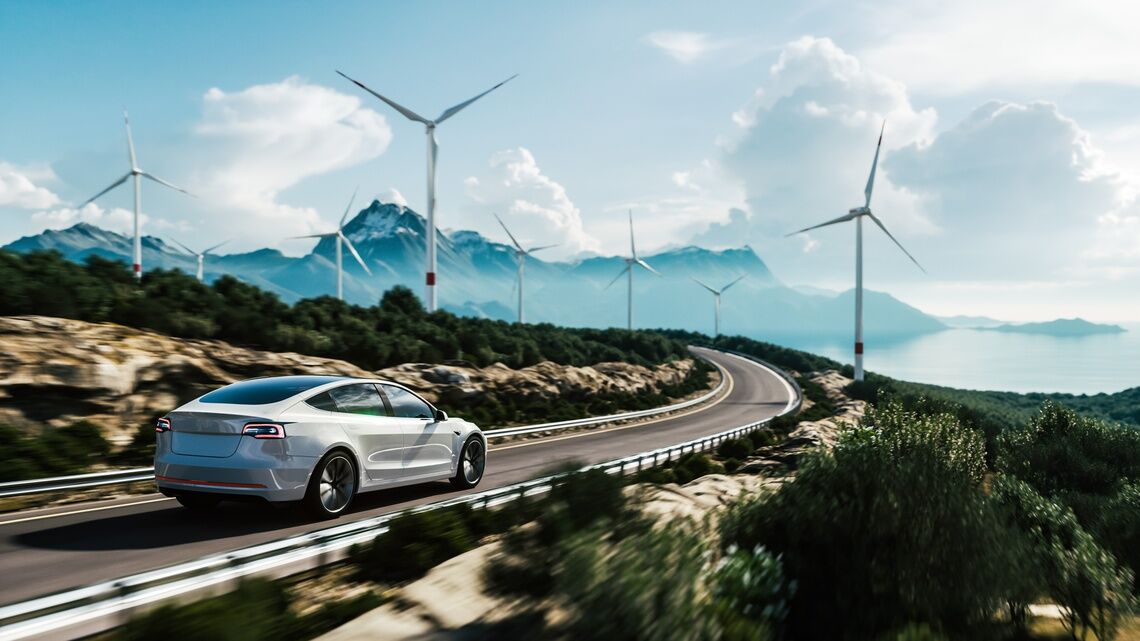
What are High Load capacity tires?
Over the last decade, the present – and future – of car technology has changed dramatically, largely due to the introduction of hybrid and electric vehicles. Their often-limited range requires all drivers to insure themselves that charging stations are on their way. These regular stops to recharge can add a significant amount of time onto your journey. The solution to this is a larger and heavier battery which can hold more charge, allowing you to enjoy a much longer range before needing to charge. But installing larger batteries means an inevitable increase in the overall weight of the car.View more -
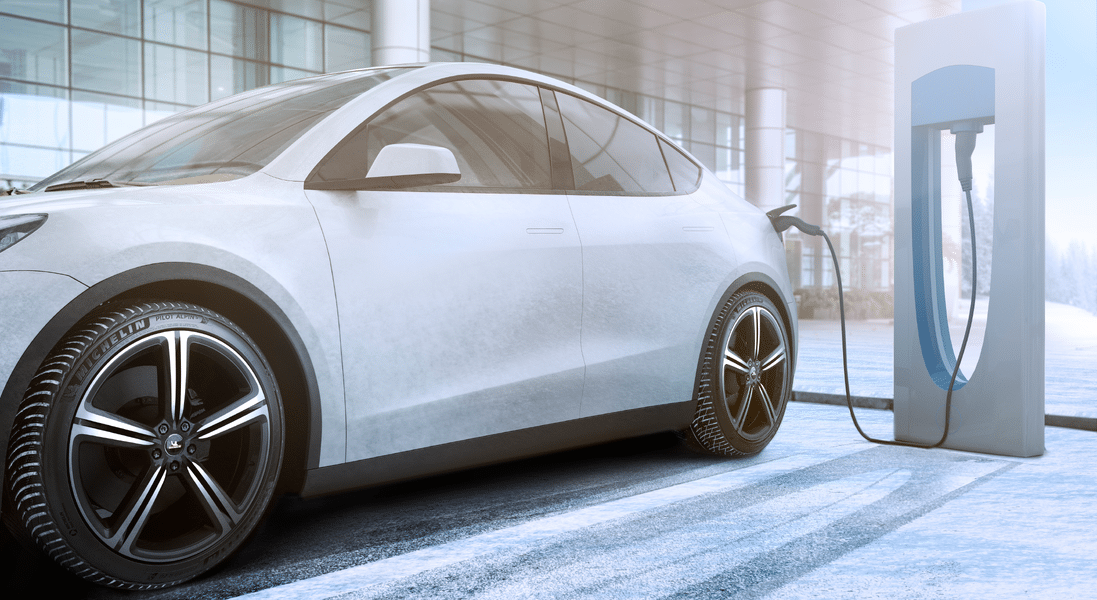
EV Winter Driving with Carl Nadeau
Listen to former racecar driver Carl Nadeau explain why you should choose Michelin winter tires for your EV and discover winter driving tips along the way.View more -

Winter tire guide for hybrid and electric cars
Choosing the right winter tires for your EV or hybrid matters more in Canada than almost anywhere else, because Canadian winters are more demanding and last longer. EVs are heavier than combustion vehicles, which means longer braking distances on slippery roads. Winter tires designed for EVs address this with cold-weather compounds for grip, low rolling resistance construction to minimize range loss, and acoustic tuning to keep the cabin quiet. Monitor pressure monthly in winter: cold temperatures drop tire pressure and compound the range reduction caused by cold batteries.View more
(1) - noise disturbance - Internal noise measurement, done in 2016 on size 245/45 R19 on KIA Cadenza. Noise level measured on the range "170-230Hz". Results may vary according to vehicle, tire range and size, speed and road conditions.