What Is Motorcycle Tire Tread Depth?
A motorcycle tire's tread depth measures how worn the tire is. It is the vertical distance from the top of the tread to the base of its grooves.
As your tires wear down with use, the rubber erodes, reducing performance, particularly on wet roads. For safety, Canadian regulations set a minimum tread depth requirement. If your tire’s tread depth falls below this limit, it becomes unsafe to ride.

Where Should You Measure Your Tire’s Tread Depth?
Michelin motorcycle tires include wear indicators—smooth sections within the tread grooves—that appear when the remaining tread depth is 0.8mm (1/32 inch).
In Canada, the legal tread depth limit generally aligns with 1/32 inch, but it’s important to check provincial regulations, as they may vary. Both the centre and shoulder wear must meet the legal requirements. If the tread is below the legal or technical wear limit at any point, the tire must be replaced.
Tread Depth for New Tires
Some motorcycle tires, like those designed for track use but also approved for road use, may have a shallow tread depth when new.
How to Check Your Tire’s Tread Depth
Tire wear indicators are built directly into the tire's design, inside the treads. These indicators provide a clear sign of how worn your tire is. If the tread is worn down close to these indicators, it’s time to replace the tire.
How Do I Find the Wear Indicators on the Tire?
Wear indicators are located in the hollows of the tire treads. Since they can sometimes be tricky to spot, manufacturers often include small markings to guide you.
For example, Michelin tires feature small Michelin Man symbols on the rubber. These symbols help identify where the wear indicators are located.
Steps to Find Tire Wear Indicators:
Look for the Michelin Man symbol on the tire.
Find the nearest wear indicator in the main tread grooves.
Other tire brands may use a "TWI" (Tread Wear Indicator) marking instead.
What’s the Legal Requirement?
All tire manufacturers include wear indicators in their tires with a height of 0.8 mm (1/32 inch). However, it’s important to note that this value is indicative—it helps you identify when the tread is approaching the legal limit and when it’s time to replace your tires.
It’s your responsibility to ensure that your tires never wear below this legal limit.
The Risks of Driving on Worn Tires
Driving with tread below the legal limit not only violates the law but also puts your safety at serious risk. Once your tires reach this point, their performance declines significantly.
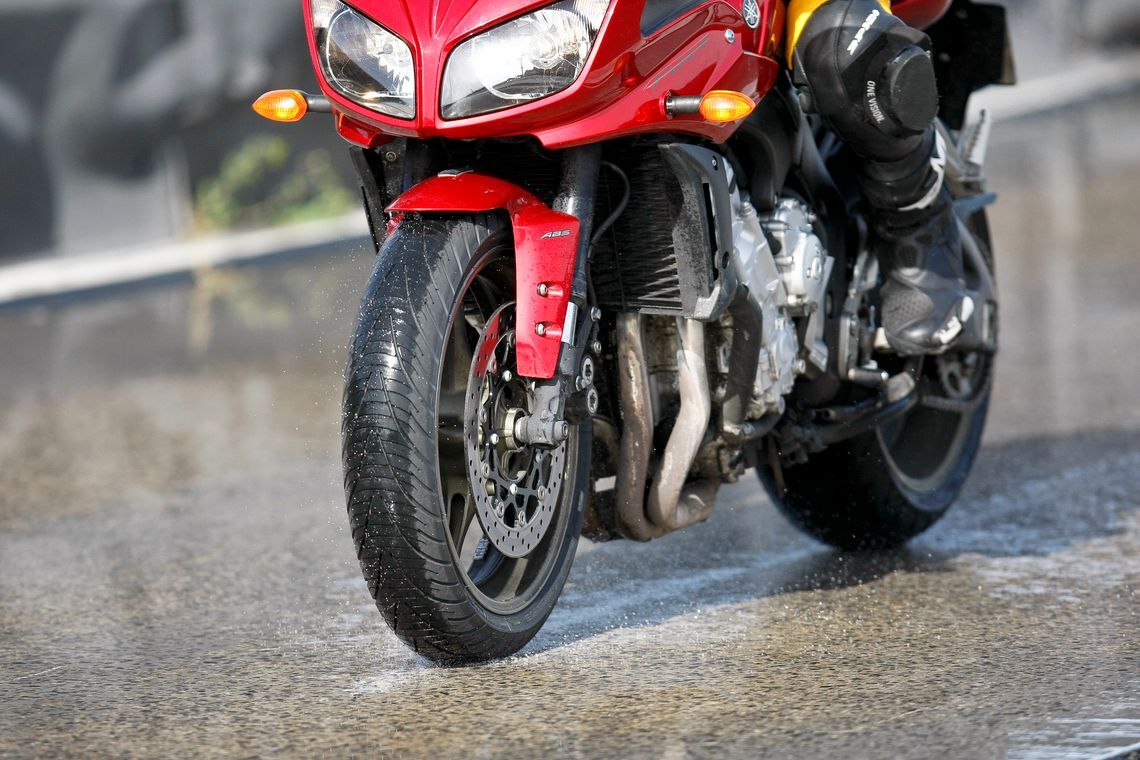
For example, in rainy conditions, worn tires struggle to channel water effectively, increasing the risk of hydroplaning or losing control. If the tread wears away entirely, the tire’s structural integrity can deteriorate, potentially leading to dangerous failures.
Michelin does not recommend using tires beyond the wear indicator.
When Should You Check the Wear Level of Your Tires?
We recommend checking your tire wear level whenever you check your tire pressure—ideally every two weeks.
What Causes Tire Wear?
It’s important to distinguish between normal tire wear, which occurs over time through regular driving, and premature wear, which may require you to replace your tires sooner than expected.
Premature wear can often be avoided by taking proper care of your tires. For example:
- Incorrect tire pressure: Over-inflation causes excessive wear in the centre of the tire, while under-inflation leads to wear on the shoulders. Check your tire pressure monthly and adjust it to the manufacturer’s recommendations.
- Driving habits: Aggressive driving, improper alignments, or worn suspension components can lead to uneven or premature wear.
- Transmission issues: Mechanical problems can also affect tire wear.
If you notice uneven or excessive wear, consult your local tire dealer for an inspection.

Dealer Locator
Search among our dealers to find where your tire is available
FAQ
Read our Frequently Asked Questions.
Canada follows federal regulations that set a minimum tread depth of 1 mm (approximately 1/32") for motorcycle tires. However, some provinces may have additional requirements—check with your provincial transport authority for your specific region. Michelin strongly recommends replacing motorcycle tires before reaching this legal minimum: at 1 mm of tread, wet-weather grip is severely compromised, and the safety margin for emergency situations has essentially disappeared. A practical replacement threshold of 2 mm (approximately 2/32") is safer.
Dramatically. Motorcycle tire tread grooves must evacuate water from the contact patch faster than on a car—the smaller contact patch concentrates the water evacuation requirement. As tread depth decreases, water evacuation capacity drops and hydroplaning risk increases at lower speeds. At 1 mm of remaining tread in wet conditions, the tire is operating at or near the limits of safe wet performance. The transition from 3 mm to 1 mm tread depth in wet conditions can be the difference between confident braking and a dangerous slide.
Look for the Michelin Man logo on the tire sidewall—it marks the location of a small raised indicator in the tread groove below it. When the surrounding tread wears down to the same level as this indicator, the tire has reached its minimum wear level. Check at multiple points around the tire's circumference, as wear can be uneven. For the rear tire, check both the center band (which wears from acceleration) and the shoulders (which wear from cornering). Front tires wear more at the edges from braking and cornering forces.
Yes—the coin test works for a rough check. In Canada, insert a dime into the tread groove with the edge pointing down. If the letters of the denomination are fully covered by tread, you're above the minimum. For more precision, a tread depth gauge (inexpensive at any auto parts store) is recommended. On motorcycle rear tires, check at the center (most worn from acceleration) and at 45° to each side (worn from cornering). Don't assume the center reading represents the full tire—rear tires often wear significantly faster in the center than at the shoulders.
In Canada, riding with tires below the legal tread limit is an equipment violation that can result in a fine and, in severe cases, having the vehicle removed from the road. More significantly, in the event of a collision, insurance adjusters routinely inspect tires—tires below the legal limit can be used to establish contributory negligence, potentially affecting claim outcomes. The safety consequences are more immediate and severe: at 1 mm or below, the tire's wet-weather grip is insufficient for emergency braking situations that may arise at any moment.