MICHELIN Primacy 3
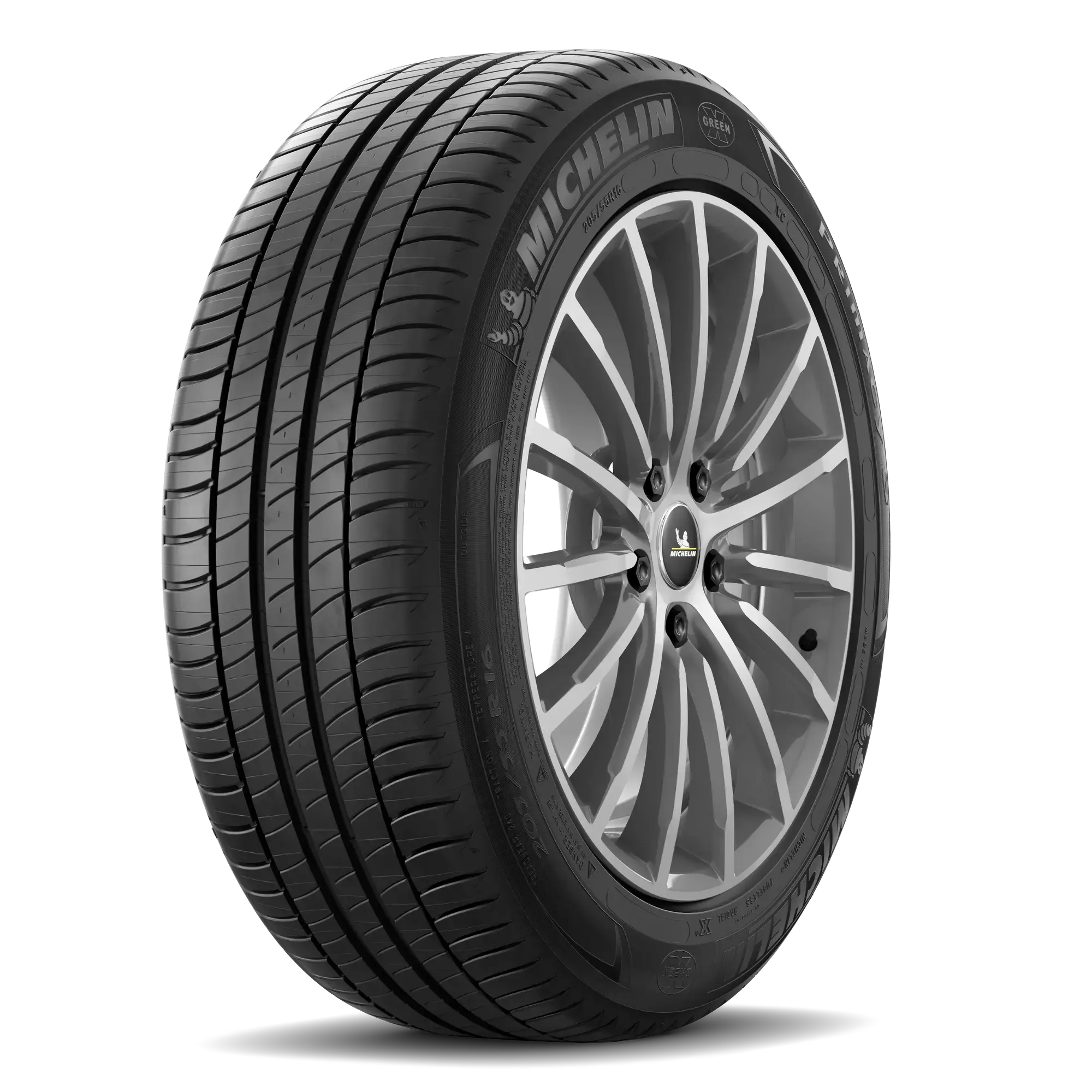
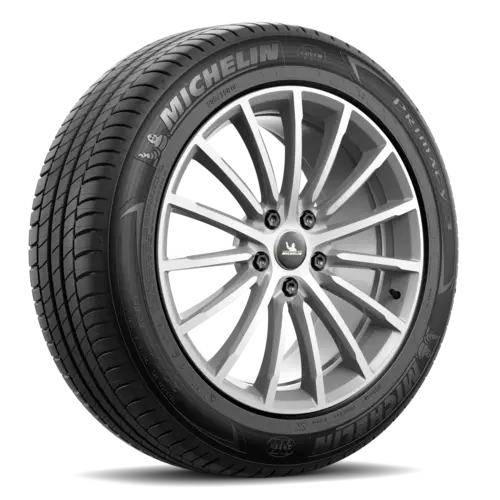

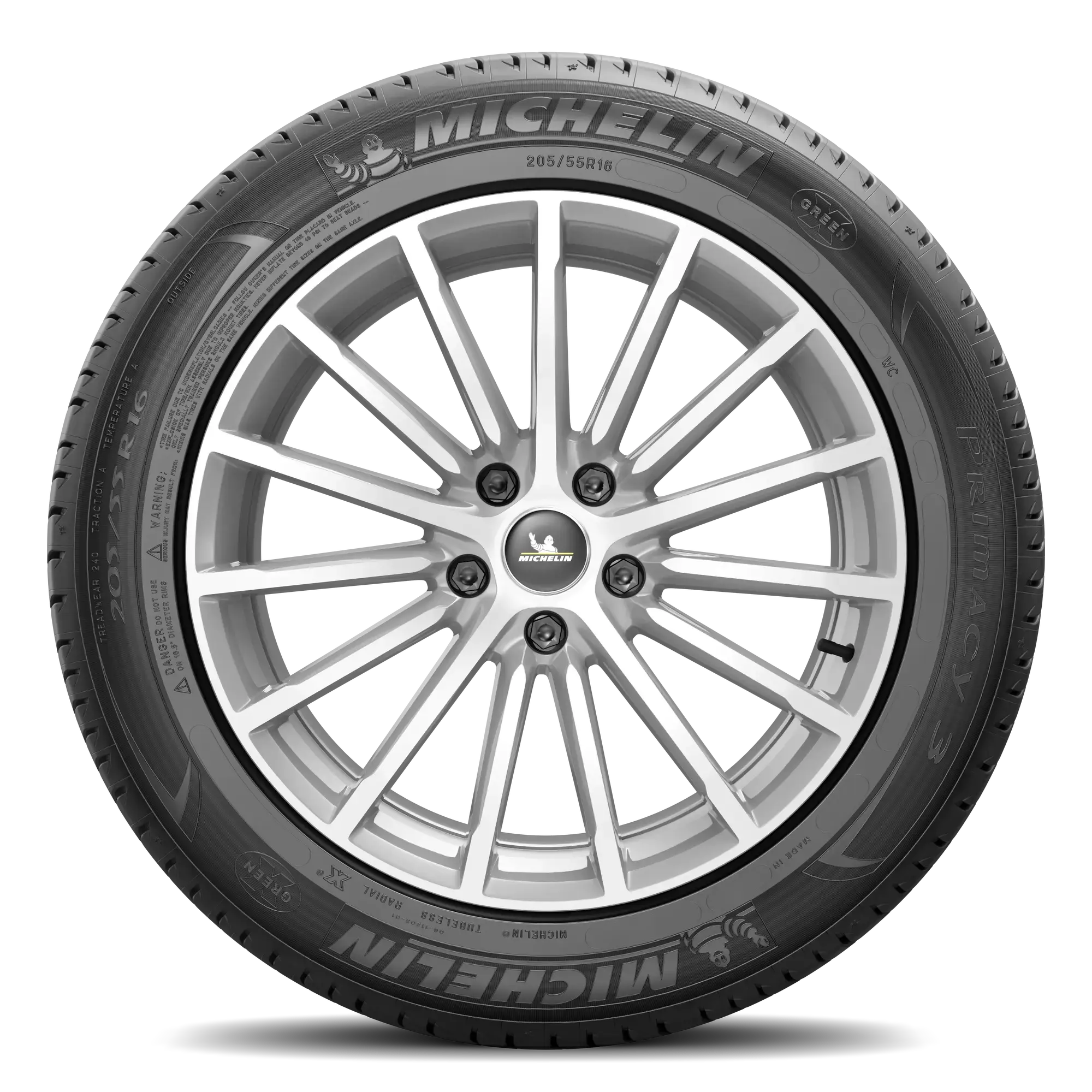
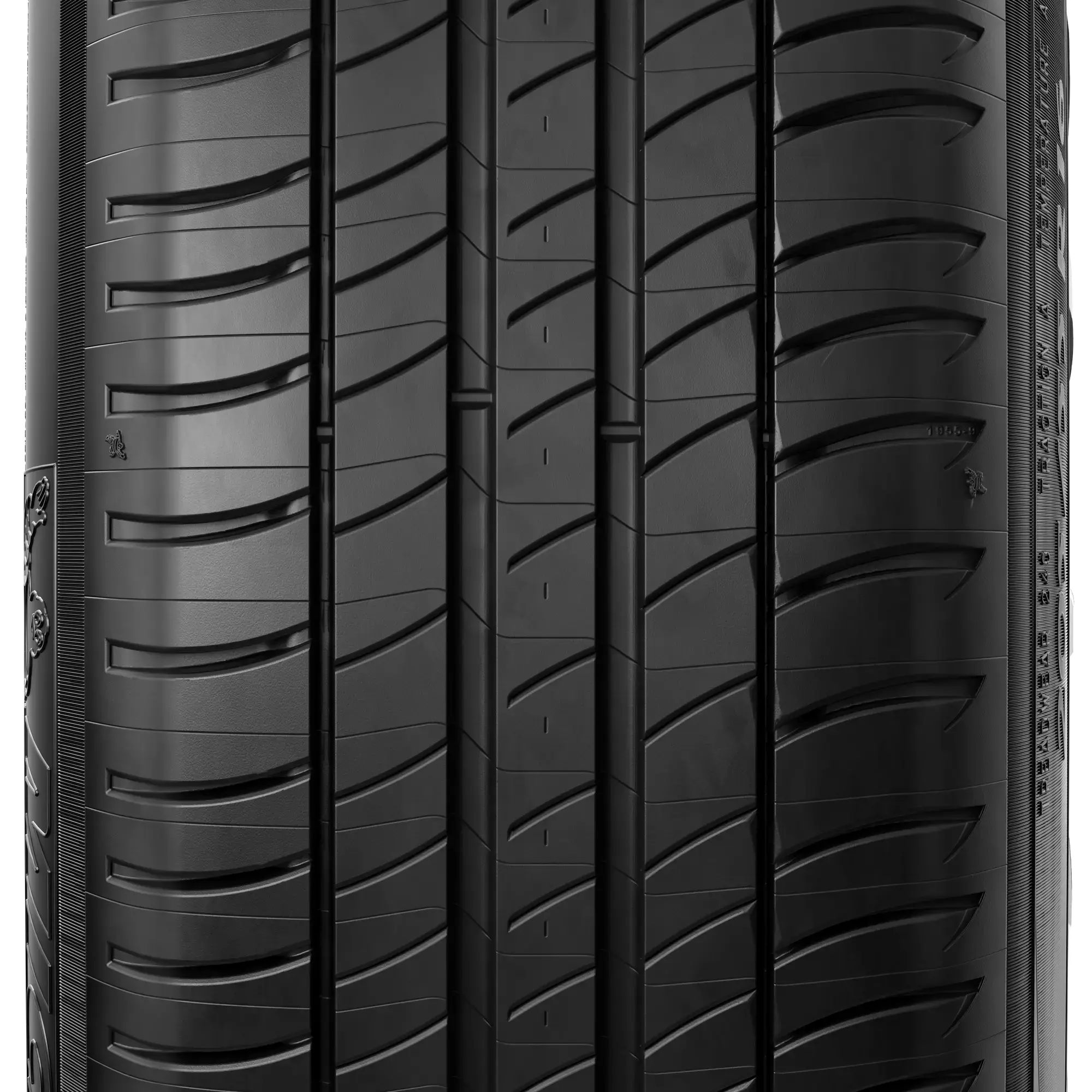
Get the most miles from your fuel tank or range from your EV batteries. Michelin's proven legacy of innovation means these tires were designed for best in class efficiency, so you can drive the distance knowing you're doing your part for the environment.
MICHELIN

Key benefits for Primacy 3 tire
Excellent performance on wet roads ensures safe driving on rainy days in summer.[1]
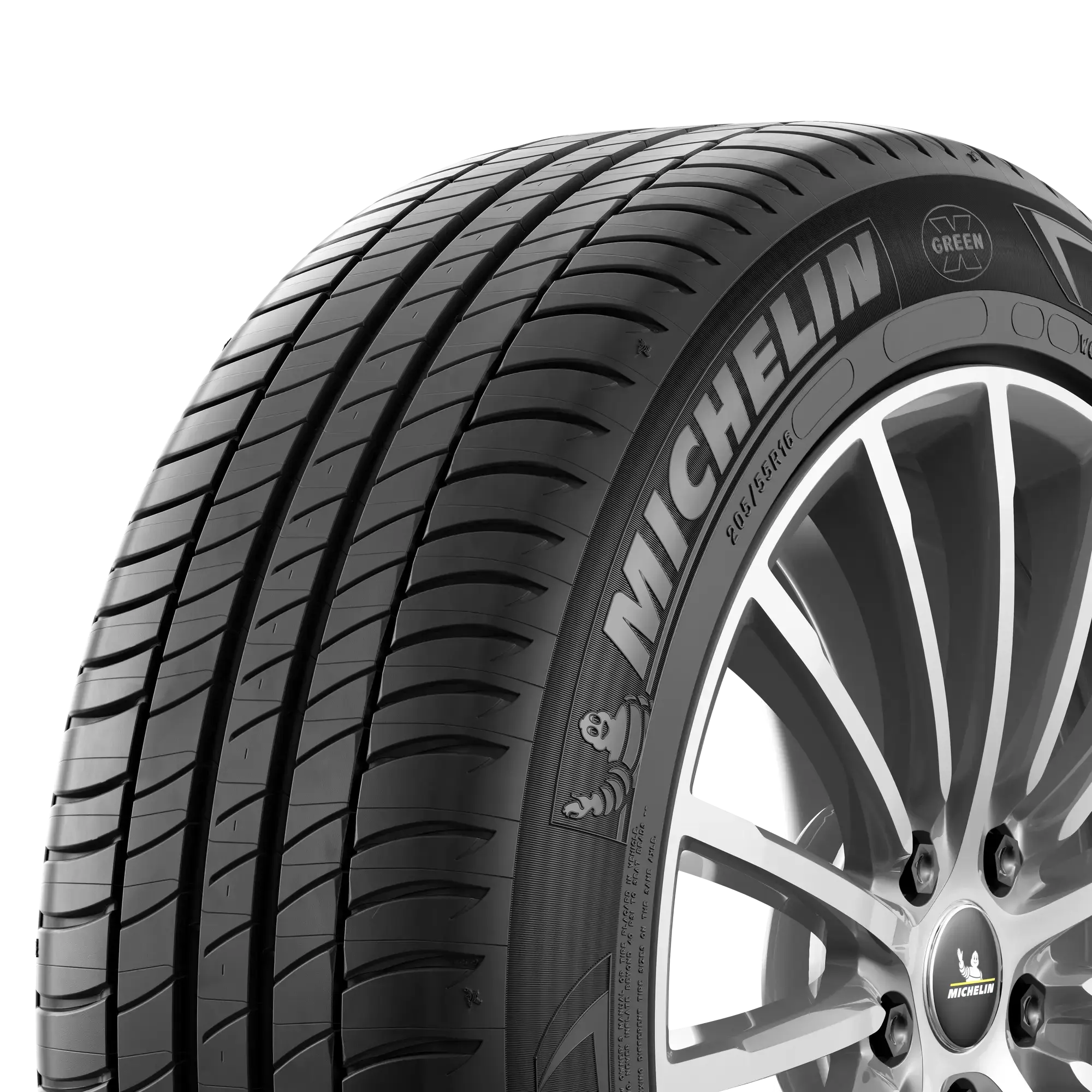
Auto-blocking sipe technology, along with a patented rubber tread compound, combine to produce excellent performance on wet roads[1]. The MICHELIN Primacy 3 summer tire gives you and your passengers safe and comfortable driving on daily commutes or long road trips. Premium wet performance from a premium tire.

MICHELIN Primacy 3 Warranties
We've got your back. A promise of this magnitude can only come from Michelin.
We want you to be 100% satisfied with your Michelin replacement passenger or light truck tires so they are backed by the Michelin Promise Plan™.
The Michelin Promise Plan™ includes the following benefits: 60-Day Satisfaction Guarantee, Roadside Assistance, Manufacturer's Limited Warranty & Treadwear Warranty.
Discover more 
Primacy 3 TIRE REVIEW
There are 416 reviews for the Primacy 3

Rating Snapshot
When asked, 92% of reviewers recommend this tire
For any matter regarding customer service (in-store experience, after-sales service, delivery, etc.) please contact our Consumer Care team
Review Summary
The tires provide excellent performance, comfort, and durability, with strong grip in dry and wet conditions, quiet ride, and long tread life. Many customers report getting over 40,000 miles from a set. However, some issues have been noted, particularly with the run-flat version, including premature rear tire wear and frequent punctures. Overall, the tires deliver high-quality performance for most drivers, though they may not be ideal for those requiring maximum tread life or run-flat capability.
AI-generated from the text of customer reviews
1-5 on 416 reviews

Posted On January 5, 2026 by mase4comp
Collected by Bazaarvoice
Excellent tires.
Probably the best tires I have ever had on a car. Just a luxurious smooth ride with no tire noise. Handling is great. Very pricey, but I doubt I would look at an alternative considering the performance I have got out of them.
Posted on michelinman.com

Posted On November 21, 2025 by Anonymous
Collected by DriverReviews
Feels safe and handling well in all conditions,
Buy Again
Tire Performance
Value For Money
Vehicle: MINI John Cooper Works
Purchase date: 24-11-22
Approx. miles driven 3000
Posted on DriverReviews
Posted On November 20, 2025 by Anonymous
Collected by DriverReviews
Last a long time good grip
Buy Again
Tire Performance
Value For Money
Vehicle: MG ZST
Purchase date: 24-12-06
Approx. miles driven 18500
Posted on DriverReviews
Posted On November 20, 2025 by Anonymous
Collected by DriverReviews
Very well they are like for like replacements
Buy Again
Tire Performance
Value For Money
Vehicle: Audi A6
Purchase date: 24-11-12
Approx. miles driven 10000
Posted on DriverReviews
Posted On November 9, 2025 by Anonymous
Collected by DriverReviews
New tyres always feel nice and these are no exception.
Buy Again
Tire Performance
Value For Money
Vehicle: Volkswagen Passat
Purchase date: 25-08-16
Approx. miles driven 2500
Posted on DriverReviews
Legal Mentions
1 - wet braking performance - MICHELIN Primacy 3 is rated "A" or "B" on the Wet Grip Item of the European labelling scale.2 - high longevity - MICHELIN Primacy 3 tire was awarded with the best note in longevity in the comparative test done by ADAC on dimension 205/55 R16 91V, published in February 2015 and February 2018.3 - MICHELIN Primacy 4 better longevity than predecessors - Test conducted by DEKRA TEST CENTER, on Michelin's request, June-July 2017, on dimension 225/45 R17 94W on VW Golf 7 comparing MICHELIN PRIMACY 4 tire versus MICHELIN Primacy 3 tire. MICHELIN Primacy 4 tire is 20% better than MICHELIN Primacy 3 tire.4 - wet braking performance Primacy 4 - MICHELIN Primacy 4 is rated "A" or "B" on the Wet Grip Item of the European labelling scale.
V-Speed Rated Sizes:
W-Speed Rated Sizes:
Y-Speed Rated Sizes:
OE [Vehicle Manufacturer] Sidewall Marking: * = BMW, MO = Mercedes-Benz, MO S1 = Mercedes-Benz Low Emission, AO = Audi, AOE = Audi Extended, A0 S1 = Audi Low Emission
OE Code [Original Equipment Key]: L = Lexus, MB = Mercedes-Benz, AU = Audi, BM = BMW, SU = Subaru
XL = Extra Load
ZP = Zero Pressure Run-Flat Technology
BSW = Black Sidewall
>> The sizes shown are average design values for tires measured on specified measuring rim widths. Some tires may vary from this value by +/-3% of the section height (affecting overall diameter), and +/-4% of the section width.
>> Section width varies approximately 0.2" (5mm) for every 0.5" change in rim width.
>> Tread patterns are often tuned to accommodate different tire widths. Tires for a particular dimension of a given tire line may vary in appearance from the tire shown in the photograph.
WARNING: Serious or fatal injury may result from tire failure due to under inflation or overloading. To ensure correct air pressure and vehicle load, refer to vehicle owner's manual or tire information placard on the vehicle. Serious injury or death may result from explosion of tire/rim assembly due to improper mounting. Only tire professionals should mount tires and they should never inflate beyond 40 psi to seat the beads. Before mixing types of tires in any configuration on any vehicle, be sure to check the vehicle owner's manual for its recommendations.
DANGER: Never mount a 16" diameter tire on a 16.5" rim.
DANGER: Never mount a 17" diameter tire on a 17.5" rim.
DANGER: Never mount a 19" diameter tire on a 19.5" rim.
DANGER: Never mount a 22" diameter tire on a 22.5" rim.
DANGER: Never mount a 24" diameter tire on a 24.5" rim.
Inflation pressure increase must not exceed the maximum pressure branded on the tire sidewall. When a customer requests a replacement tire with a lower speed rating than the original equipment tire, you must clearly communicate to him or her that the handling of the vehicle may be different, and that its maximum speed capability is limited to that of the lowest speed-rated tire on the vehicle. Exceeding the lawful speed limit is neither recommended nor endorsed.
Michelin North America (Canada) Inc. does not endorse the operation of any vehicle in an unsafe or unlawful manner. Exceeding the safe, legal speed limit is neither recommended nor endorsed.
For high-speed driving, additional inflation pressure and possibly reduced tire loading and/or upsizing is required. In the absence of specific recommendations by the vehicle manufacturer, use the following guidelines based on those in the European Tyre and Rim Technical Organization Standards Manual.
For speeds over 160km/h (100 mph), load and inflation must be adjusted according to the table below.
H-Speed Rated Sizes:
| Maximum Speed (km/h) | 161 | 171 | 180 | 190 | 200 | 209 |
| Inflation Increase (psi) | 0.0 | 1.0 | 2.0 | 3.0 | 4.0 | 5.0 |
| Load Capacity (% of max.) | 100 | 100 | 100 | 100 | 100 | 100 |
| Maximum Speed (km/h) | 161 | 171 | 180 | 190 | 200 | 209 | 219 | 230 | 240 |
| Inflation Increase (psi) | 0 | 1 | 2 | 3 | 4 | 5 | 5 | 5 | 5 |
| Load Capacity (% of max.) | 100 | 100 | 100 | 100 | 100 | 100 | 97 | 94 | 91 |
| Maximum Speed (km/h) | 190 | 200 | 209 | 219 | 230 | 240 | 249 | 259 | 270 |
| Inflation Increase (psi) | 0 | 1.5 | 3.0 | 4.5 | 6.0 | 7.5 | 7.5 | 7.5 | 7.5 |
| Load Capacity (% of max.) | 100 | 100 | 100 | 100 | 100 | 100 | 95 | 90 | 85 |
| Maximum Speed (km/h) | 190 | 200 | 209 | 219 | 230 | 240 | 249 | 259 | 270 | 280 | 290 | 299 |
| Inflation Increase (psi) | 0 | 0 | 0 | 0 | 1.5 | 3 | 4.5 | 6 | 7.5 | 7.5 | 7.5 | 7.5 |
| Load Capacity (% of max.) | 100 | 100 | 100 | 100 | 100 | 100 | 100 | 100 | 100 | 95 | 90 | 85 |
IMPORTANT: While all-season tires are designed to provide reliable performance in moderate winter conditions, the use of four (4) tires is recommended for optimal performance and may be mandatory in certain jurisdictions.