MICHELIN Defender2
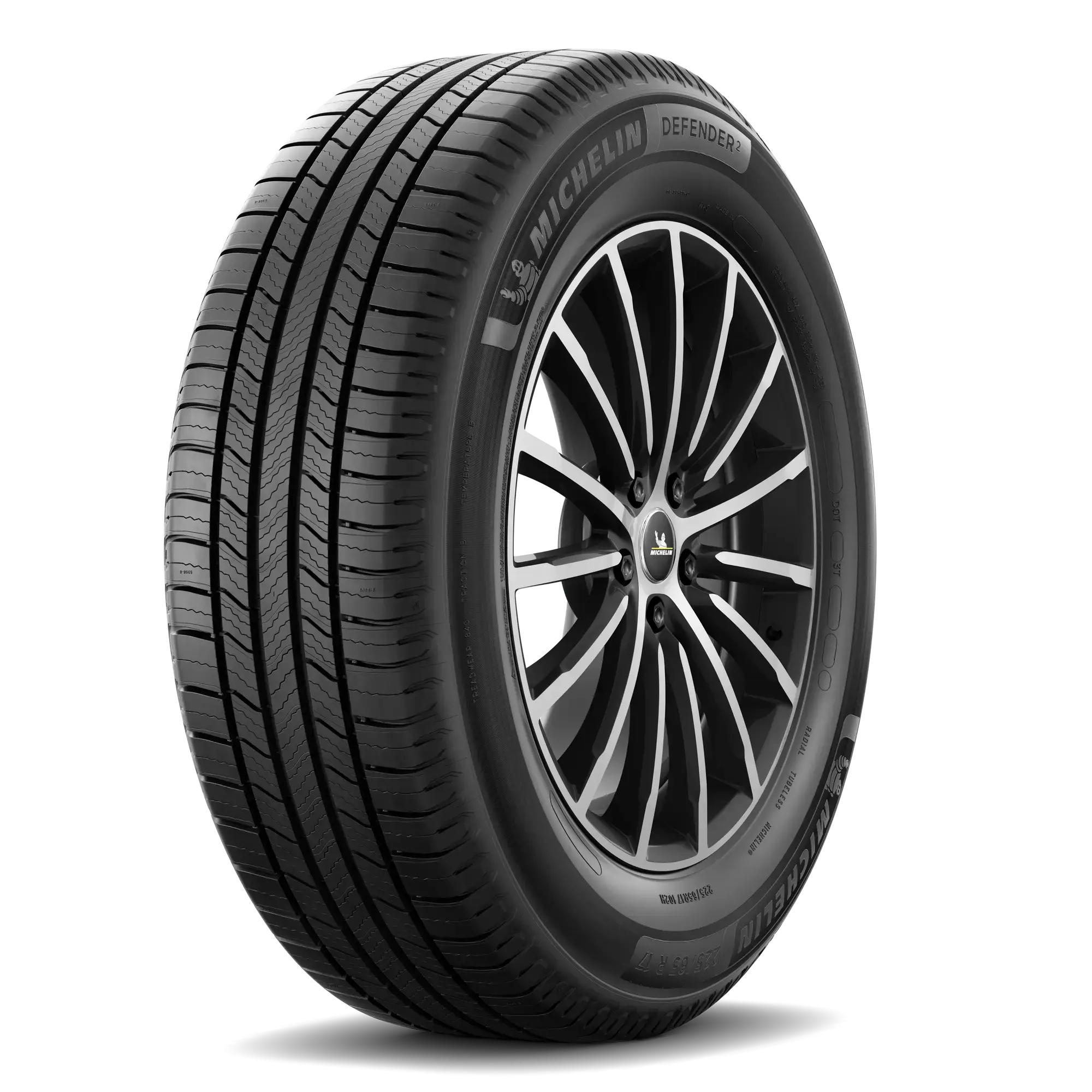

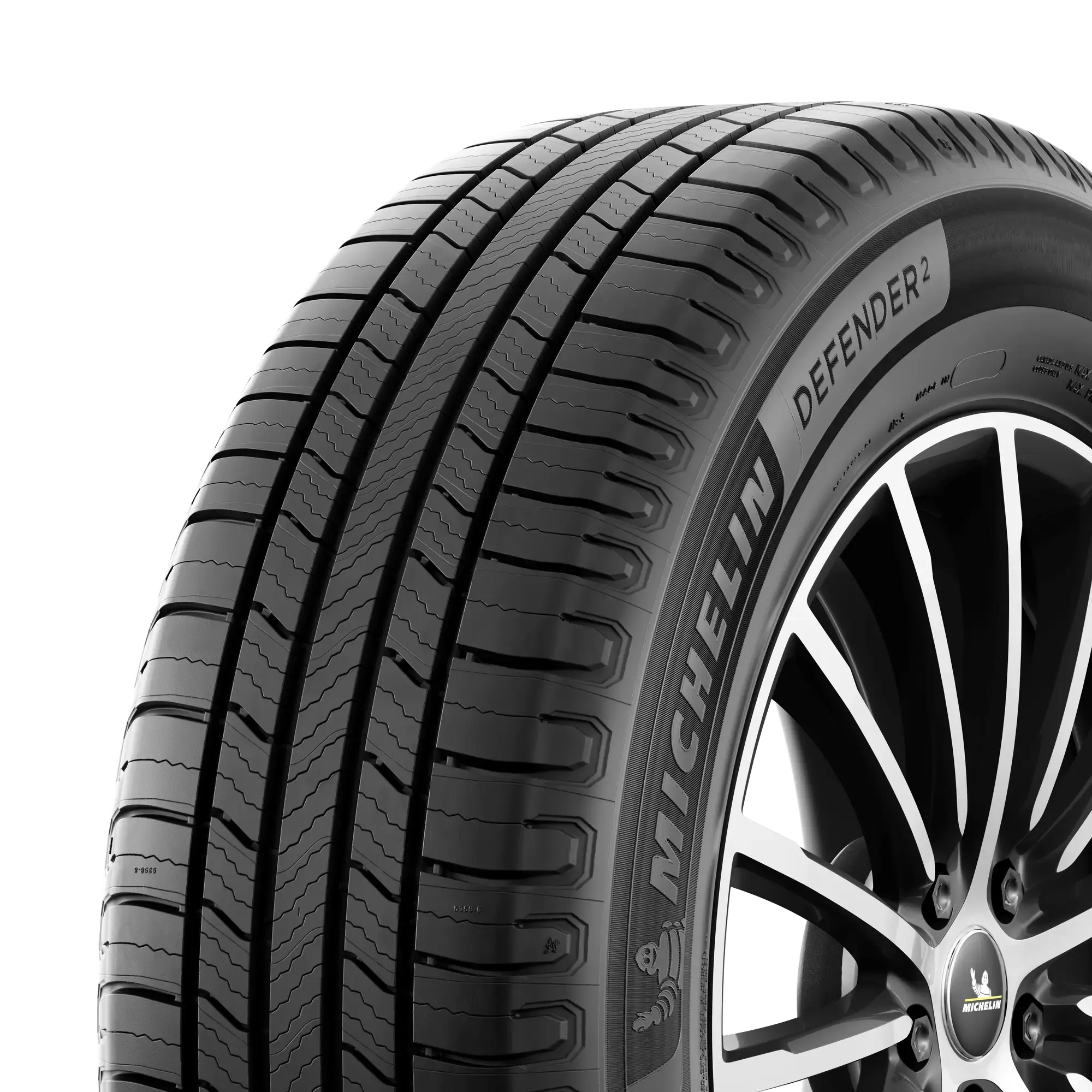
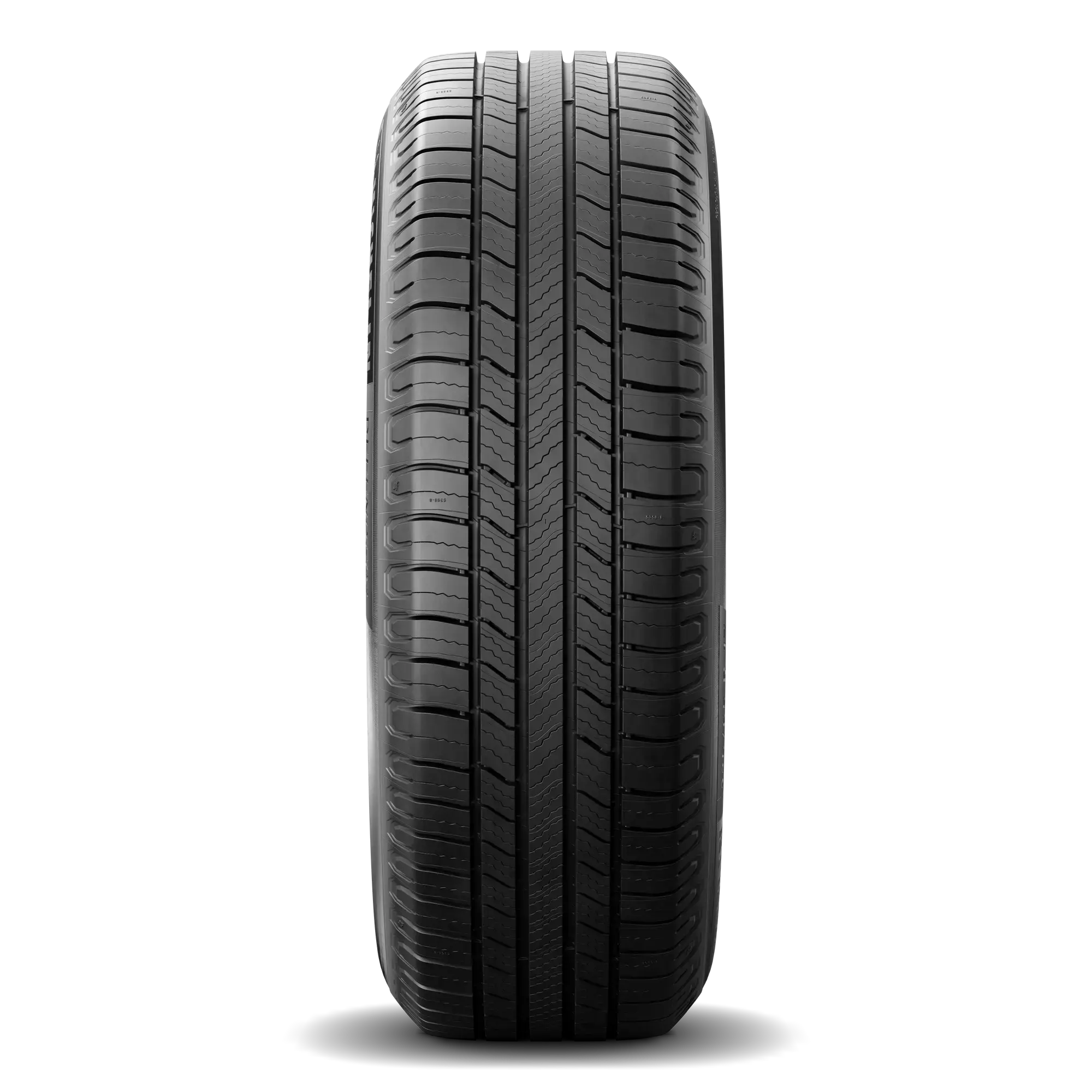
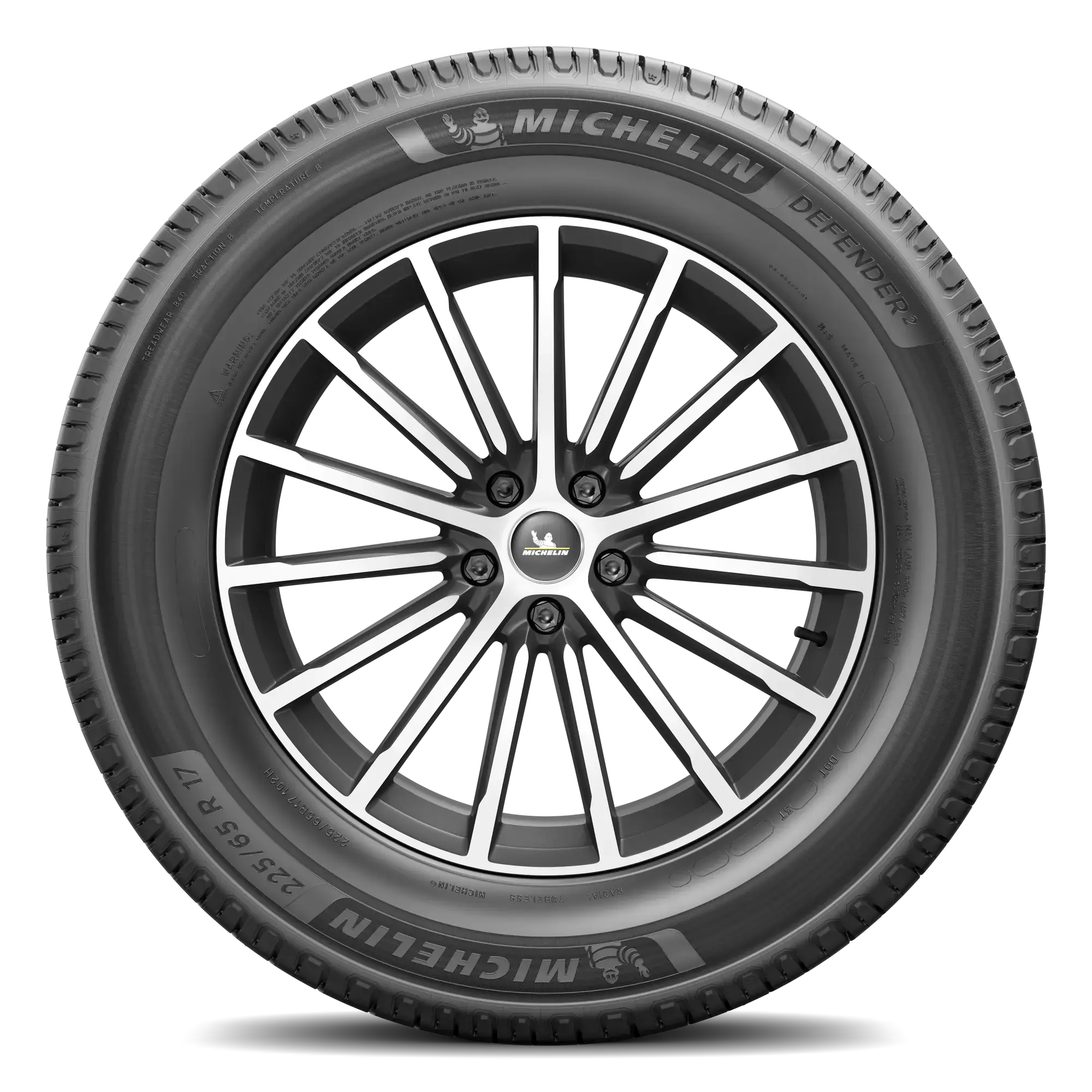
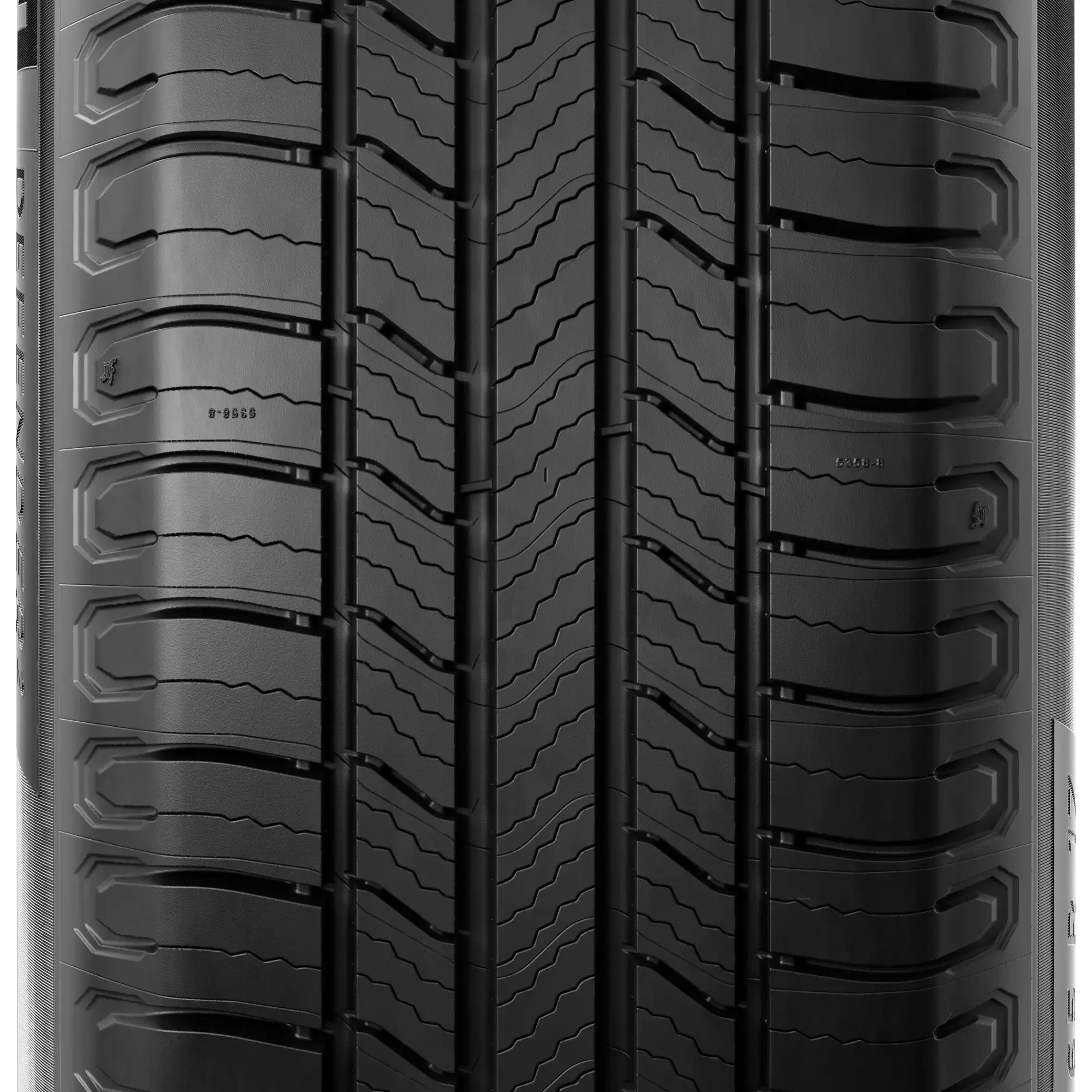
Tires that last longer without any compromise. Whether planning for the next family road trip, going about your daily routine, or using your vehicle to support your professional activities, Michelin offers the superior mileage you need while delivering unparalleled comfort and a quiet drive.
A High Performer That Lasts Longer
- Michelin 4x4, CUV, SUV all-season on-road tire
- Long-lasting tread life
- Secure handling in all weather conditions
- Quiet and comfortable ride
MICHELIN

Key benefits for Defender2 tire
Engineered to Outlast
The Michelin Defender2 tire outlasted three leading competitive tires by more than 40,000 kilometers on a treadwear test, delivering 2 extra years of treadlife. 1

MICHELIN Defender2 Warranties
We've got your back. A promise of this magnitude can only come from Michelin.
We want you to be 100% satisfied with your Michelin replacement passenger or light truck tires so they are backed by the Michelin Promise Plan™.
The Michelin Promise Plan™ includes the following benefits: 60-Day Satisfaction Guarantee, Roadside Assistance, Manufacturer's Limited Warranty & Treadwear Warranty.
Discover more 
Defender2 TIRE REVIEW
There are 1127 reviews for the Defender2

Rating Snapshot
When asked, 93% of reviewers recommend this tire
For any matter regarding customer service (in-store experience, after-sales service, delivery, etc.) please contact our Consumer Care team
Review Summary
The Michelin Defender 2 tires offer a mix of positive and negative attributes. Positives include excellent grip and handling, especially in wet and snowy conditions, a smooth and quiet ride, and long tread life and durability. However, some customers have reported decreased fuel efficiency, a rough and bumpy ride quality, and premature wear not meeting the warranty. Overall, the tires provide good traction and handling, but customers should be aware of the potential impact on fuel economy and ride quality.
AI-generated from the text of customer reviews
1-5 on 1127 reviews

Posted On May 31, 2026 by AL816
Collected by Bazaarvoice
They don't wear fast
Value of Product
Safety
Quality of Product
Posted on michelinman.com
Posted On May 30, 2026 by Rick_S
Collected by Bazaarvoice
Great Mileage Warranty and All Season Use!
Defender 2 design will provide excellent traction, durability and grip! Excited for the long-term wear too.
Posted on michelinman.com
Posted On May 30, 2026 by 1927BO
Collected by Bazaarvoice
Good tires
Posted on michelinman.com
Posted On May 29, 2026 by Jim29
Collected by Bazaarvoice
Michelin: If you want the best tire made!
I have used Michelin tires on numerous vehicles since I bought my first set in 1968. Handling is superior to any other tire I’ve used. I’ve even used them without balancing them without experiencing vibrations so I think they are quite precisely constructed. If vehicle is in alignment and rotation is done these Defender 2 tires will wear longer than the 80,000 mile warranty. Michelin tires have improved the ride of every vehicle I’ve put them on. Currently I own two vehicles, 2017 Toyota Sienna and 2024 Nissan Ariya both of which have Defender 2 tires on them and significantly add to the quietness and ride quality of both vehicles.
Value of Product
Safety
Quality of Product
Posted on michelinman.com
Posted On May 29, 2026 by DEFEND THIS
Collected by Bazaarvoice
Michelin hit home run
Amazing when people clearly post stuff on review that make themselves sound ignorant. These tires are great examples of Michelin Engineering. Long tire life. Smooth ride and quiet. Choose the correct tire pressure for optimal wear I always run aprox 5-8 PSI over door sticker, so you don't wear to heavy on outside of tires. This gives you optimal tire contact and tread life. This also makes smoother turning and brings life to your steering Nice job michelin
Value of Product
Safety
Quality of Product
Posted on michelinman.com
Michelin answers your questions
Find quick, reliable answers to your most common questions about Michelin tires on our FAQ page.
FAQ
The Michelin Defender 2 offers improved tread life, enhanced wet braking, and better fuel efficiency. It is also designed to accommodate the growing market of heavier vehicles, including electric vehicles (EVs), by handling extra weight and torque.
Yes, the Michelin Defender 2 is specifically designed to meet the needs of electric vehicles (EVs), offering outstanding tread life and low rolling resistance to maximize the vehicle’s driving range.
The Michelin Defender 2 is perfect for North American passenger cars, minivans, and compact- to mid-sized SUVs, providing long-lasting tread life and improved performance for daily commuting.
The Defender 2 performs well in moderate winter conditions, offering reliable traction in snow and ice. It’s optimized for year-round use, making it an ideal choice for Canadian drivers.
The Michelin Defender 2 features a tread depth of 10.5/32", slightly deeper than its predecessor, offering better grip and longevity.
Yes, the Michelin Defender 2 offers a 130,000 km warranty on most sizes, providing added peace of mind and ensuring that the tire performs well over time.
The Michelin Defender 2 offers superior tread life and fuel efficiency compared to other long-warranty tires, making it a great option for consumers looking for durability and reliable performance over time.
Yes, the Michelin Defender 2 is designed to handle all driving conditions, including wet, dry, and light snow, while offering enhanced durability and comfort.
The Defender LTX M/S 2 is ideal for regions of Canada that experience light snow and mild winter conditions. It is not recommended for areas with heavy snowfall or extreme winter conditions.
The Michelin Defender 2 is manufactured exclusively in Michelin’s North American plants located in Ardmore, OK, Columbia, SC, and Nova Scotia, Canada.
Legal Mentions
1 Based on U.S. Department of Transportation Average Annual Miles per driver (13,500 miles) and Desrosiers Automotive Consultants estimate of annual average kilometers driven in Canada (23,000 km), and on a treadwear test using tires in size 225/65R17 on 2021 Toyota RAV4s where the MICHELIN® Defender®2 showed an estimated life (based on calculating the most-worn groove of a rotated set) of 151,922 kilometers versus the Bridgestone® Alenza® AS Ultra at 76,765 kilometers and the Continental® TrueContact™ Tour at 95,595 kilometers and the Goodyear® Assurance® MaxLife™ at 83,525 kilometers. Actual on-road results may vary.2 Based on internal wet braking tests from 50 MPH and internal dry braking tests from 60 MPH using tires in size 225/65R17 on a 2021 Toyota RAV4, where the MICHELIN® Defender®2 tire had an average stopping distance of 130.0 ft wet and 120.9 ft dry versus the Bridgestone® Alenza® AS Ultra with an average stopping distance of 127.8 ft wet and 125.8 ft dry and the Continental® TrueContact™ Tour with an average stopping distance of 145.2 ft wet and 129.2 ft dry and the Goodyear® Assurance® MaxLife™ with an average stopping distance of 134.0 ft wet and 125.0 ft dry. Actual on-road results may vary.
XL = Extra Load
>> The sizes shown are average design values for tires measured on specified measuring rim widths. Some tires may vary from this value by +/-3% of the section height (affecting overall diameter), and +/-4% of the section width.
>> Section width varies approximately 0.2" (5mm) for every 0.5" change in rim width.
>> Tread patterns are often tuned to accommodate different tire widths. Tires for a particular dimension of a given tireline may vary in appearance from the tire shown in the photograph.
WARNING: Serious or fatal injury may result from tire failure due to underinflation or overloading. To ensure correct air pressure and vehicle load, refer to vehicle owner's manual or tire information placard on the vehicle. Serious injury or death may result from explosion of tire/rim assembly due to improper mounting. Only tire professionals should mount tires and they should never inflate beyond 40 psi to seat the beads. Before mixing types of tires in any configuration on any vehicle, be sure to check the vehicle owner's manual for its recommendations.
DANGER: Never mount a 16" diameter tire on a 16.5" rim.
DANGER: Never mount a 17" diameter tire on a 17.5" rim.
DANGER: Never mount a 19" diameter tire on a 19.5" rim.
DANGER: Never mount a 20" diameter tire on a 20.5" rim.
Inflation pressure increase must not exceed the maximum pressure branded on the tire sidewall. When a customer requests a replacement tire with a lower speed rating than the original equipment tire, you must clearly communicate to him or her that the handling of the vehicle may be different, and that its maximum speed capability is limited to that of the lowest speed-rated tire on the vehicle. Exceeding the lawful speed limit is neither recommended nor endorsed.
For high-speed driving, additional inflation pressure and possibly reduced tire loading and/or upsizing is required. In the absence of specific recommendations by the vehicle manufacturer, use the following guidelines based on those in the European Tyre and Rim Technical Organization Standards Manual.
For speeds over 160km/h (100 mph), load and inflation must be adjusted according to the table below.
H-Speed Rated Sizes:
| Maximum Speed (km/h) | 100 | 106 | 112 | 118 | 124 | 130 |
| Inflation Increase (psi) | 0.0 | 1.0 | 2.0 | 3.0 | 4.0 | 5.0 |
| Load Capacity (% of max.) | 100 | 100 | 100 | 100 | 100 | 100 |