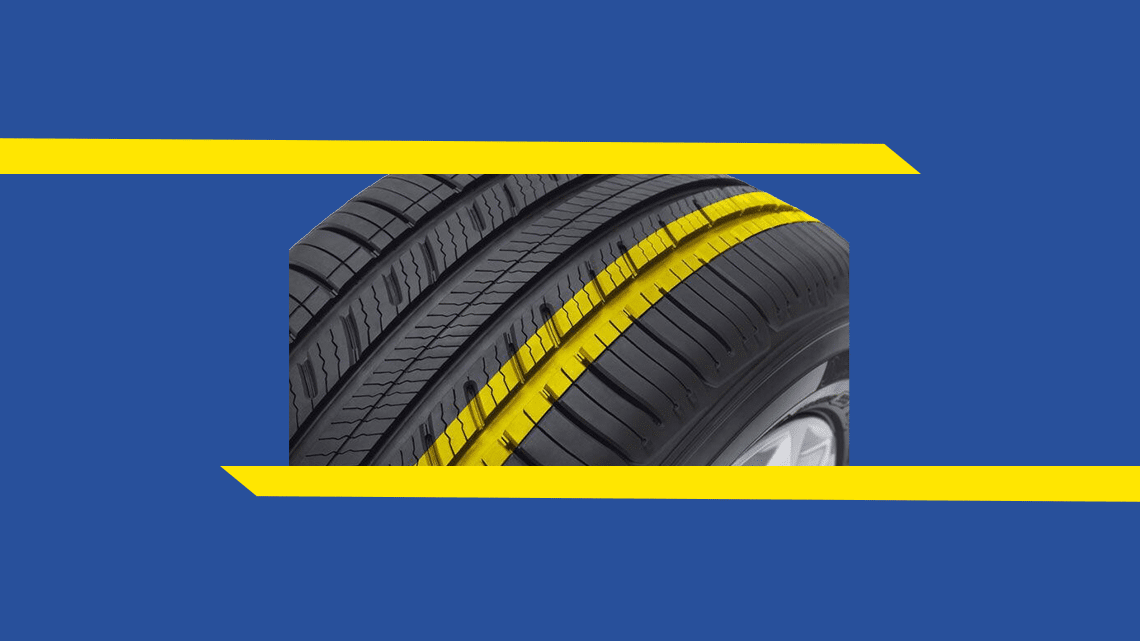
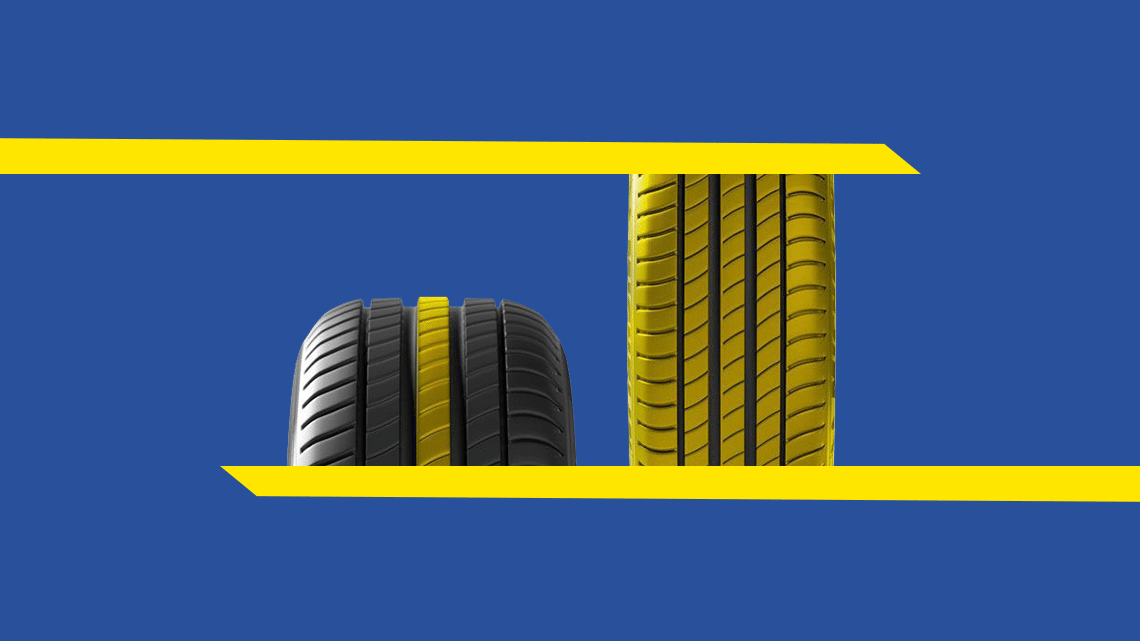
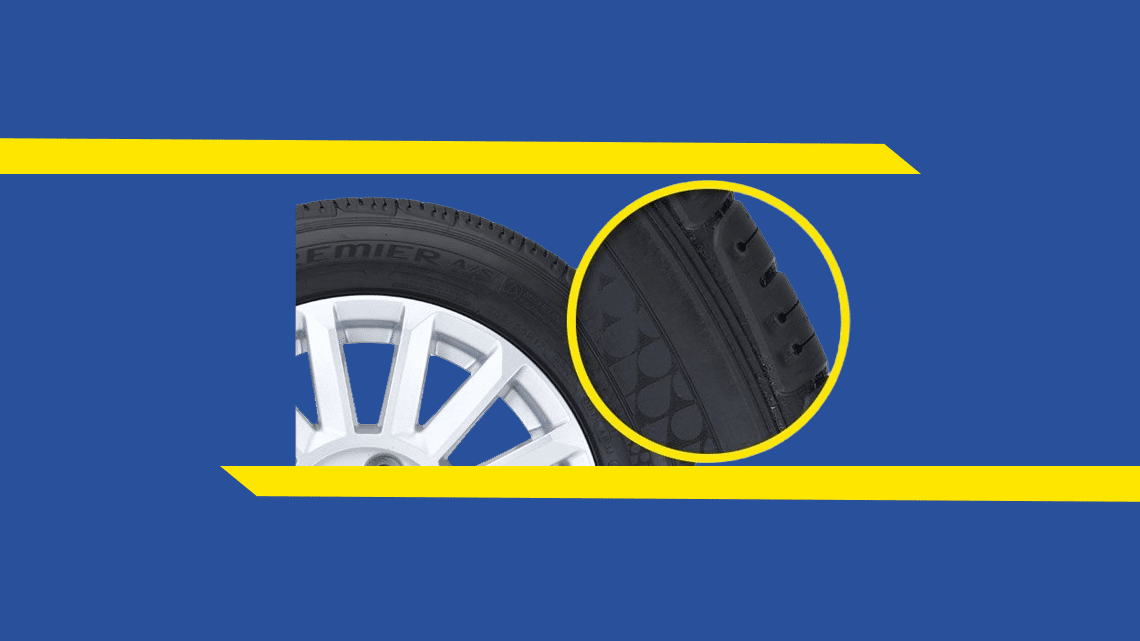
Symptom: Wear on Both Edges
Diagnostic: Underinflation
Reduces tread life through increased treadwear on the outside edges (or shoulders) of the tire.
Generates excessive heat, which reduces tire durability and can lead to tire failure.
Reduces fuel economy through increased rolling resistance (soft tires make your vehicle work harder).
Solution:
Add air to your tire until it reaches the proper air pressure (psi, as measured by an air pressure gauge). To find the proper air pressure, consult your vehicle’s owner’s manual or find your recommended psi on the sticker on your door jamb. (Here's how)
If your tire continues to lose pressure, visit your local authorized Michelin tire dealer.

FIND A DEALER
FAQ
Read our Frequently Asked Questions.
The vehicle pulls slightly to one side (if only one tire is low).
Steering feels heavy or vague.
Fuel consumption increases noticeably.
The TPMS warning light illuminates (indicates 25% or more below recommended pressure).
Visible tire bulging at the sidewall contact area when parked.
More road noise than usual.
The ride feels softer or 'floaty' compared to normal.
A tire underinflated by 20% can reduce its lifespan by 20%—that's potentially thousands of fewer kilometres before replacement. Underinflated tires also increase rolling resistance, which increases fuel consumption by 1–2%. In terms of safety, underinflated tires generate excessive heat at highway speeds, which weakens the internal structure and can lead to blowout. Braking distances increase on both wet and dry roads. The compound effect of underinflation is that every system on the car is compromised: safety, economics, and tire longevity all suffer simultaneously.
Tires naturally lose approximately 1–2 psi per month through normal permeation. In addition, for every 6°C drop in ambient temperature, tire pressure decreases by roughly 1 psi—making Canadian falls and winters particularly demanding. Most drivers need to add air at least once or twice between seasonal swaps, and more often in cold snaps. Monthly pressure checks are the standard recommendation. Never rely solely on the TPMS light—by the time it activates, the tire is already significantly underinflated.
Not necessarily, but treat it as urgent rather than something to address 'next time you're at a gas station.' The TPMS light activates when pressure is 25% or more below the recommended level—at that point, the tire is already at a pressure where heat and wear are accelerating. In cold weather, a TPMS activation often means seasonal pressure drop rather than a puncture. Check all four tires as soon as safely possible, inflate to the vehicle placard pressure, and monitor over the next few days to determine whether pressure loss is ongoing (indicating a puncture or leak).
Do not simply reinflate a completely flat tire without professional inspection. A tire that has run at very low or zero pressure—even briefly—may have sustained internal damage: cord breakage, inner liner damage, or bead deformation. These may not be visible from outside but can cause failure under load. The correct procedure is to have the tire demounted, inspected internally, and either repaired (if damage is within repairable limits) or replaced. Reinflating and driving on a tire that has been run flat is a known cause of subsequent blowouts.