Riding a Motorcycle in the Snow
After a snowfall, roads become slippery. As the snow melts, it turns into water, which can freeze into ice when temperatures drop again overnight.
This scenario is common during the Canadian winter, and it’s natural to wonder:
Is it safe to ride your motorcycle in the snow or on ice?
Will your tires provide sufficient grip during your journey?
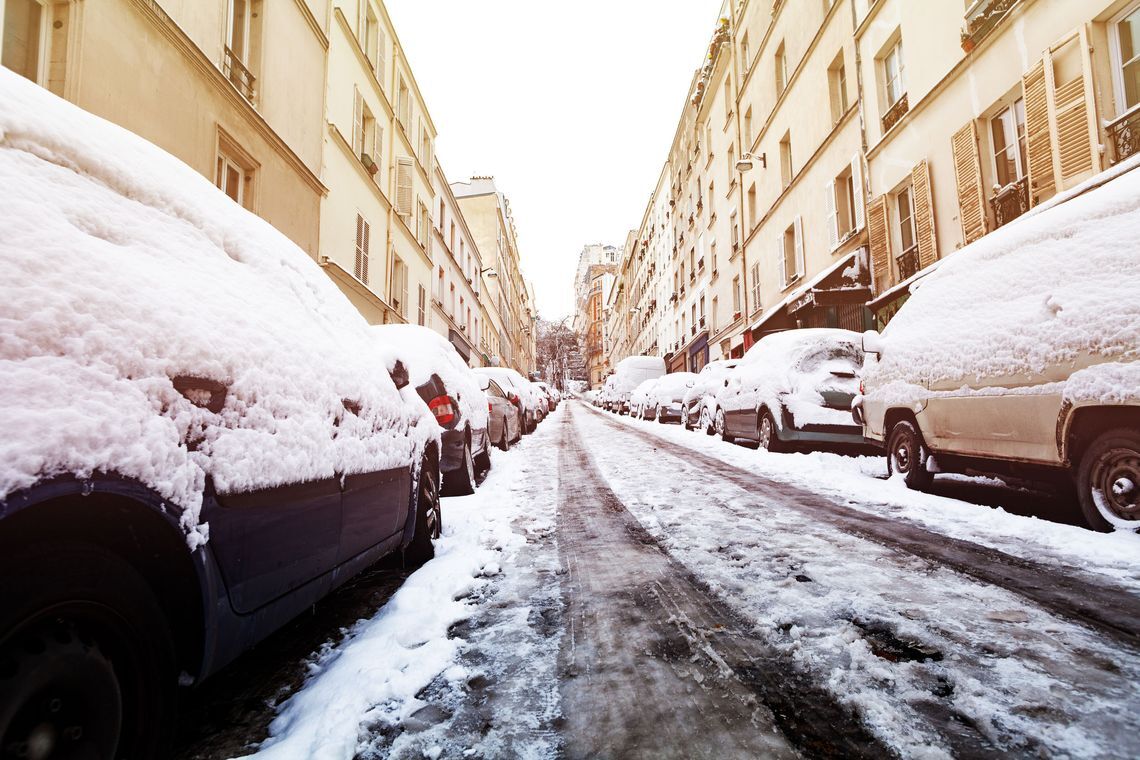
It’s not just a question of grip.
Of course, grip is essential. Grip conditions are much more precarious when the ground is wet and cold than when the weather is warm and dry. Fitting appropriate tires with good grip on snowy or icy roads can ensure a safe and smooth car ride.
On a motorcycle, however, it’s not just a question of grip. The other critical factor is balance. With only two wheels, maintaining balance on a snowy or icy road becomes far more challenging, especially if grip is compromised by the cold.
Tire Temperature
Every tire has an ideal operating temperature at which it performs best. Reaching this temperature requires driving a certain number of kilometres, depending on the type of tire.
However, in winter, cold temperatures cause the rubber to stiffen, reducing its grip effectiveness. In such conditions, it becomes nearly impossible to reach and maintain the ideal tire temperature.
In competition, tire warmers are used to preheat tires before a race. Once heated, the tires maintain their temperature due to the high speeds achieved during the race.
Off the track, even if tire warmers were available, tires would quickly lose their temperature in the cold because normal driving conditions and speeds differ significantly from those on a race track.
Maintaining the ideal tire temperature on a snowy or icy road is nearly impossible.
So, What About Motorcycle Snow Tires?
At Michelin, we design and manufacture winter tires for four-wheeled vehicles to handle challenging winter driving conditions and low temperatures. These tires have been rigorously tested and validated to deliver optimal performance in even the most severe winter conditions.
If similar solutions could solve winter challenges for motorcycles, we would design and manufacture motorcycle snow tires.
But we haven’t. Why not?
Our commitment is to create quality tires that deliver optimum performance for your safety. As we’ve explored, riding a motorcycle on snowy or icy roads introduces significant safety challenges that even motorcycle snow tires cannot resolve.

FAQ
Read our Frequently Asked Questions.
Dedicated motorcycle snow tires do exist in some markets (primarily Scandinavia), but they're not widely available or commonly used in Canada. The reality of motorcycle winter use in Canada is that most motorcycle tires are not designed for snowy or icy conditions, and no standard motorcycle tire provides meaningful grip on ice. For Canadian riders, the practical answer is: when roads may have ice, don't ride. The physics of a two-wheeled vehicle on ice are essentially unsurvivable—there's no tire that changes this fundamental reality.
On dry, cold roads (above 0°C): with appropriate tires and significantly reduced speeds and lean angles, experienced riders can ride safely on cleared pavement. Below 0°C, even clear-looking pavement can have invisible ice (black ice). On snow or ice: riding a motorcycle is extremely dangerous regardless of tire type—the lateral grip requirements of a two-wheeled vehicle cannot be met on these surfaces. Most Canadian riders store their motorcycles from October/November through March/April and use appropriate four-wheeled transportation in winter.
Tire compound: standard motorcycle tires stiffen below 5°C, reducing grip significantly on even dry pavement.
Black ice: invisible and provides near-zero grip—virtually impossible to survive a low on ice at any speed.
Reduced visibility: shorter days, fog, snow, and reduced conspicuity in winter gear.
Cold impairment: gloved hands and cold weather reduce dexterity and reaction time.
Other drivers: winter drivers are more distracted, less attentive to motorcycles, and visibility is generally reduced for all road users.
Ride only when roads are completely dry and clear—no moisture, ice, frost, or snow.
Allow much longer tire warm-up distance: cold compound requires several kilometres of gentle riding before approaching normal temperatures.
Reduce lean angles significantly: less grip means less margin before traction loss.
Ride only in daylight with full visibility.
Check tire pressure before departure: cold temperature drops pressure significantly—below-spec pressure worsens already-reduced cold-weather grip.
Be especially cautious on bridges, shaded sections, and intersections where ice forms preferentially.
Most Canadian motorcyclists store their bikes from approximately November through March, depending on the region. During storage: prepare the bike properly (fuel stabilizer, battery tender, tire pressure check, oil change), store in a dry indoor environment, and cover with a breathable cover. De-winterizing in spring requires a systematic inspection: tires (check for flat spots, cracks, pressure), brakes, battery, fluids, chain, lights, and a careful first ride to verify everything functions correctly before returning to normal traffic. See the motorcycle winter storage and de-winterizing pages on Michelin.ca for complete checklists.