1. Check your tire pressures regularly
For bikes with inner tubes, it’s important to ensure they are properly inflated before you go out for a ride. This is our first tip to prevent a puncture and it is as simple as it is essential.
If you ride with very low pressures, you run the risk of pinching your inner tube and causing a puncture without even cycling over anything sharp. You may even run the risk of your tire popping off the rim!
Overinflating tires, on the other hand, can cause tire damage. It is unlikely that you will damage your tire by pumping it by hand. But when you start cycling, you increase the tire pressure simply by adding your own weight. So, if you are riding on rough terrain, every bump and jolt can cause a sudden increase in tire pressure and damage the tire.
To find out the right pressure for your bike, read our pressure guide.
2. Check your tires regularly
Whether you have a bike with tubeless tires or one that uses inner tubes, regularly checking your tires can help prevent punctures by catching a potential problem before you ride off.
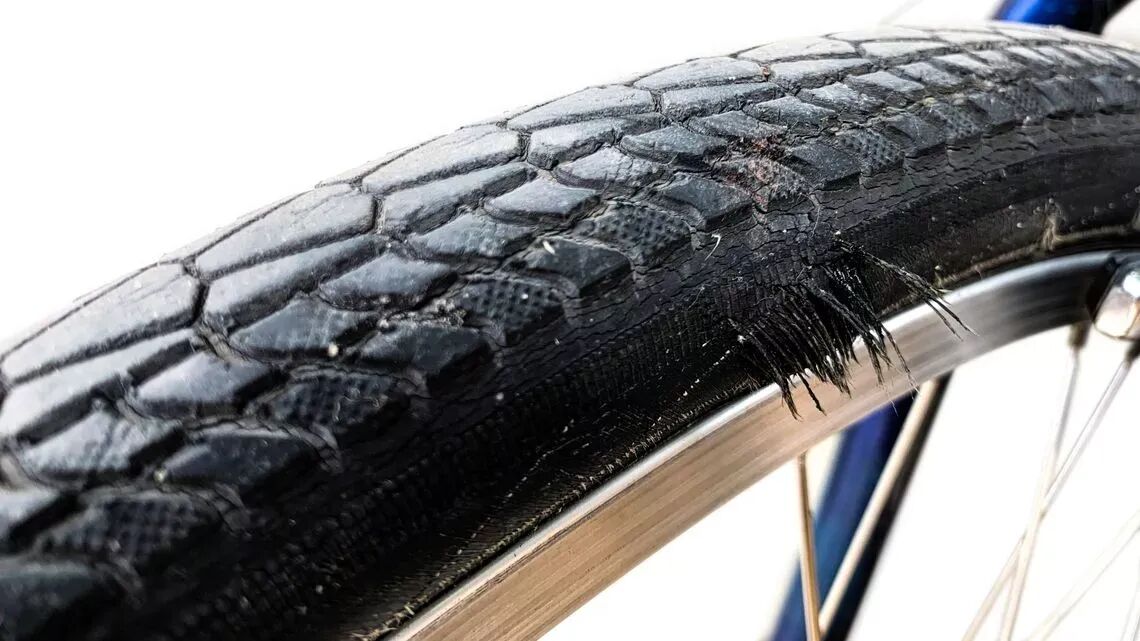
The most obvious problem would be something sharp stuck in the tread. We’re not just talking about bits of glass or screws, as bits of sharp gravel can be enough to cause a puncture if they are left to continually press against the same spot over and over. You can also detect tire areas of pronounced tire wear. In a tubeless tire, this is a puncture waiting to happen. For a tire with inner tubes, a worn patch can expose the tube, or allow something sharp to quickly penetrate the outer tire and thus cause a puncture.
3. Consider using tubeless ready tires
Riding with tubeless tires allows you to enjoy the comfort of lower tire pressures and, as we shall see, if they don’t quite prevent a puncture, they can avoid the inconvenience of it. Road bikes and mountain bikes with tubeless tires are still not the most common option for a typical bike. But those who do cycle on tubeless tires enjoy the benefit of a technology that relies on the use of a latex sealant inside the tire. This liquid (or “slime” as it is sometimes called) effectively seals off any puncture s before the tire can lose any pressure. All MICHELIN tubeless ready tires must be used with tire sealant. Practically speaking, latex tire sealant only seals small holes (up to 3mm in diameter). This means that you must ride carefully after it happens.
Tire sealants usually need renewing every 3 months (depending on the type of sealant), which means that it makes sense to purchase a tire sealant kit that contains everything you need. Alternatively, many cycle dealers will be happy to do the job for you. Some riders using conventional inner tubes also advocate using tubeless latex sealant inside a bike inner tube. One product which illustrates this technology is MICHELIN’s Bicycle Tire Puncture Prevention Gel. Optimised for Schrader valves, this gel can be used on both tubed and tubeless tires. It seals punctures, limits pressure loss, and allows riders to continue cycling without having to stop to re-inflate the damaged tire.
4. Don’t use old tires
For the reasons mentioned above, you should always change your tires when they start to look a worn. As well as the reduced traction from worn treads, a thinning outer layer increases the risk of punctures. In short, if you want to prevent a puncture, don’t delay when you notice that your tires are too worn and need changing.
5. Don’t ride in the gutter
When cycling on the roads, staying out of the gutter can prevent a puncture. The reason why street sweepers concentrate on the gutters is that this is where all the random road debris eventually settles.
So, if you are riding in the gutter, the risk of encountering an object that could puncture your tire is much higher than on the road.
It’s not just the gutters. There are also potholes to worry about, which are both a puncture hazard (from the sudden, sharp impact) and something that could throw you off your bike if you are not paying attention.
6. Use wider tires
This tip for puncture prevention is for cyclists who often venture off the beaten track. Skip this one if you are exclusively a road-going cyclist who rarely sees anything more uneven than a speed bump.
For the rest of you, switching to a wider tire offers greater resistance against small points of impact, as well as helping to avoid pinch flats. But before considering wider tires, check your bike’s specifications to find out the maximum width that you can mount on your bike. This information is defined by your bike’s manufacturer.
7. Inspect your rims
Many inexperienced cyclists underestimate the importance of wheel rims in keeping their tire properly inflated and in good condition. Tires—especially tubeless tires—sit inside the rims, and the pressure of the air inside pushes them outwards. If a rim is damaged, it air can slowly to escape, as in the case of a puncture.
A damaged rim can also cause a lot of air to escape at once when you go over a bump or through particularly rough terrain.
And, of course, if your tire is under-inflated, you are more likely to get a puncture.
By avoiding damage to your rims you can prevent a puncture. Rims can become damaged if you have a collision, hit a particularly bad bump or pothole, or even if you are a little heavy-handed when changing a tire. A good way to spot rim damage that is not immediately apparent to the naked eye is to raise the wheel off the ground and spin it. Any warping or deformation should be much easier to spot when a wheel is spinning.
Another thing to consider is the condition of the rim tape. When you change your tires or tubes, take the opportunity to inspect the rim tape. Make sure that it covers the spoke holes of your wheel. For tubeless tires, the rim base is essential because it creates the seal. For tube type tires, if the rim tape is damaged, the risk of puncture is very high. It is necessary to inspect the rim tape and sometimes to change it. In case of doubt get in touch with a certified professional.
8. Don’t repair large puncture
We understand the desire to save money, but there is a limit to how far a puncture repair kit can take you. If the hole is substantial, or if it is a tear rather than a clean hole, or if any of this damage is on the sidewall of the tire, it is time to get a replacement. Attempting a patched repair means exposing yourself to another puncture in the very near future. It is possible to repair tires in some obvious situations but in other cases the tire can be too damaged to be repaired. So if you are in any doubt about repairability, you should consult a professional.
9. Be careful when fitting new tubes or tires
We have already mentioned that rough handling of your rims when fitting new tubeless tires can lead to problems. It can be just as serious for cyclists who ride with inner tubes.
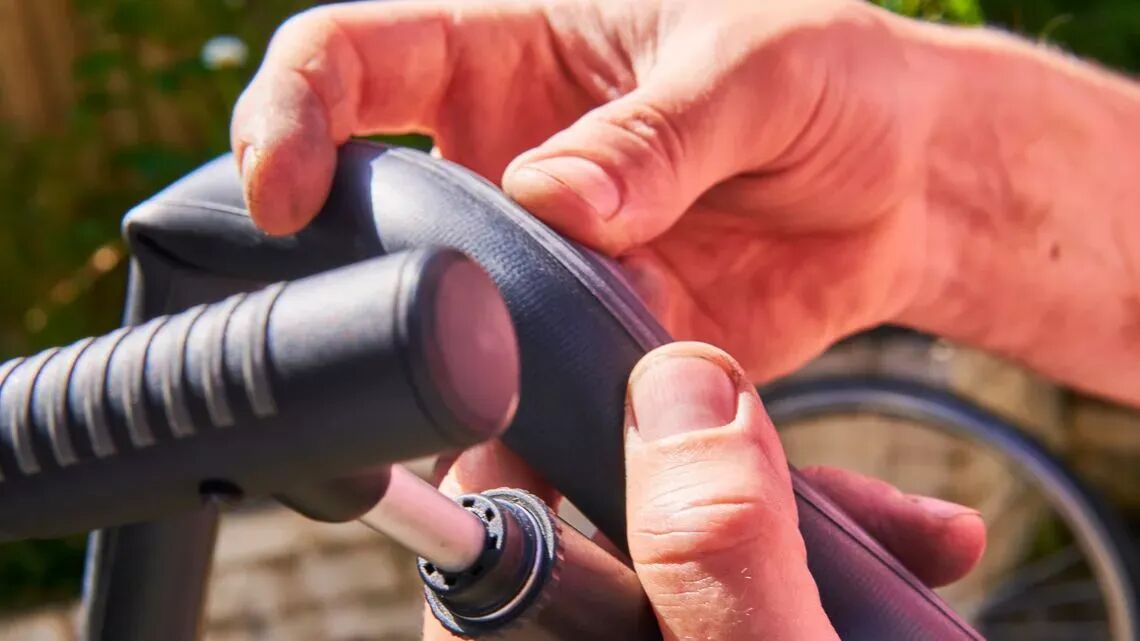
If you are not careful when replacing an inner tube, you could pinch it between the tire and rim, or damage it with your bike tools. This can cause small (or large) punctures in an inner tube.
And, to make matters worse, it’s very possible —even likely— that you won’t notice the puncture until your tire is mounted and inflated. And immediately starts losing air!
Don't forget to inspect your rim tape, which can cause puncture if damaged.
10. Choose high-quality tires and inner tubes
Buying cheap tires can make you feel like you are saving money. However, they will often do the same job as more expensive tires but for a shorter amount of time.
If you opt for higher-quality alternatives, you’ll be spending more money up front, but you’ll save money in the long run because you won’t have to replace your tires or inner tubes quite so often.
Michelin has a great range of quality tires you can choose from, right below, in our tool: